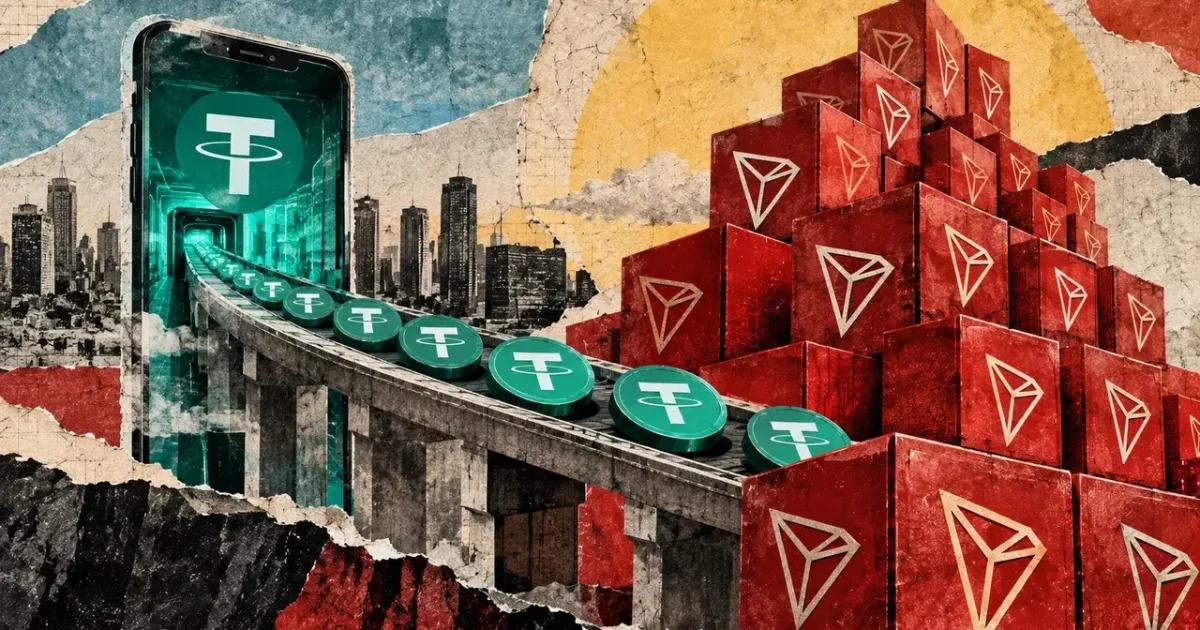
TRON’s native TRX token increased in supply every single day from July 1 through October 16, 2026, adding a net 148.6 million tokens despite $2.2 trillion in stablecoin settlement volume during the third quarter, according to TRON DAO Research data reviewed by CryptoSlate.
The 108-day consecutive issuance period reflects a structural imbalance between token creation and token destruction on the network. Block producers earn 8 TRX per block, while voters receive 128 TRX per block as consensus rewards. These emissions outpaced the TRX burned through network resource fees, which users pay to access Bandwidth and Energy capacity on the chain.
During Q3 alone, 360.2 million TRX were issued across all sources while 234.5 million TRX were burned, producing a net addition of 125.8 million tokens. From October 1 through October 16, issuance continued to exceed burns: 62.7 million TRX were issued versus 39.8 million burned, adding 22.9 million tokens in just 16 days.
The daily mechanics show persistent pressure. Between October 1 and October 16, average daily issuance reached 3.916 million TRX while average daily burns totaled 2.486 million TRX, leaving a gap of 1.430 million tokens added to the network each day.
Stablecoin Growth Amid Token Issuance
TRON’s stablecoin ecosystem expanded significantly in Q3. Combined USDT and USDD supply on TRON reached $93.88 billion, up 5.5% from Q2. Stablecoin settlement volume hit $2.2126 trillion in Q3, representing a 5.1% increase from the prior quarter.
The positive net issuance does not indicate deflation. Deflation requires total burns to exceed total issuance. Instead, TRON entered a period of supply expansion: the 125.8 million tokens added in Q3 represented 0.133% of the opening supply of 94.850 billion TRX.
Mechanics of the Imbalance
TRON’s resource system allows users to obtain Bandwidth and Energy capacity through TRX staking or delegation. Staked resources recover over a 24-hour rolling window without destroying the underlying tokens, meaning resource consumption does not automatically create deflationary pressure. Users, stakers, and passive token holders experience network economics differently.
To reach supply equilibrium under a fixed issuance scenario, burns would need to increase by 57.5%. Alternatively, under a fixed burn scenario, issuance would need to decline by 36.5%. In the October 1–16 period, burns offset 63.5% of new issuance, leaving the net gap.
TRON DAO Research did not specify whether governance has discussed or voted on adjusting the block reward (8 TRX) or voter reward (128 TRX) parameters. The analysis does not extend beyond October 16 or forecast whether positive net issuance will continue.