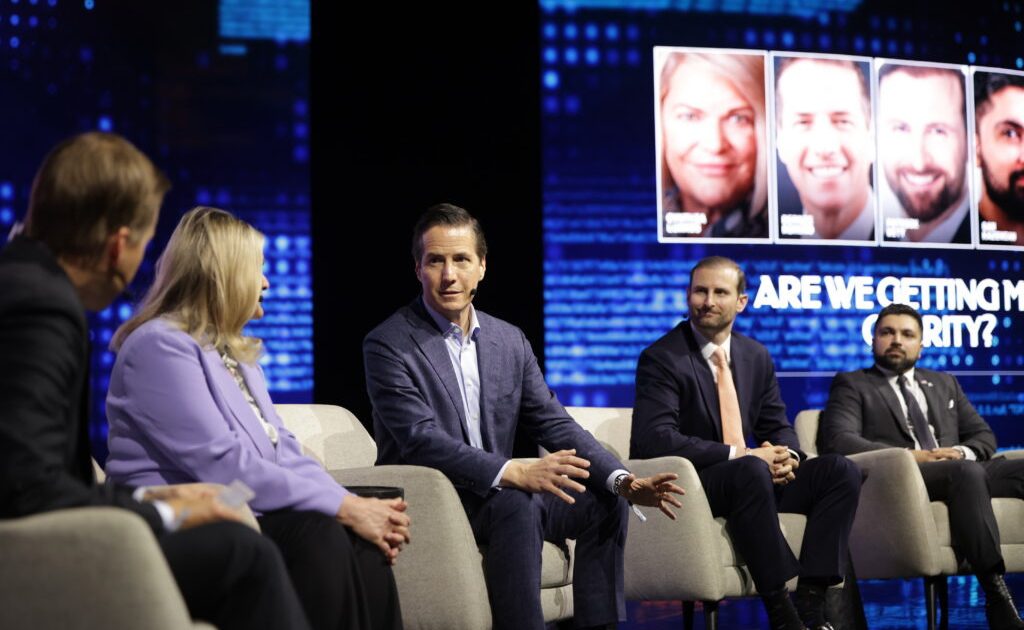
Three Republican lawmakers positioned U.S. cryptocurrency regulation as a national security imperative at Bitcoin 2026 in Las Vegas on April 27, arguing that American regulatory hostility toward digital assets hands strategic advantage to China. The panel discussion, moderated by Coinbase Chief Policy Officer Faryar Shirzad, marked a significant rhetorical shift within the GOP toward framing crypto policy through geopolitical competition rather than consumer protection.
National Security Frame Reshapes Crypto Debate
Rep. Mariannette Miller-Meeks of Iowa invoked America’s 250th anniversary to contextualize the stakes, describing Bitcoin as a vehicle for “financial democracy” with applications ranging from financial inclusion for domestic abuse victims to protection against government account freezes. Rep. Zach Nunn, also from Iowa, emphasized the temporal urgency of regulatory reform, noting that “decisions and elections have consequences” and referencing 18 months of legislative progress. Rep. Mike Lawler of New York called for a comprehensive federal regulatory framework designed to serve the crypto industry’s interests, citing the GENIUS Act as a blueprint for coherent digital asset oversight. The panel reflected broader Republican messaging that treats crypto competence as a marker of American technological dominance.
Regulatory Reversal Signals Policy Direction
The panel’s framing represented a stark departure from the enforcement-heavy approach of the previous regulatory regime under former SEC Chair Gary Gensler, whose tenure generated millions of dollars in fines against crypto firms. Nunn specifically criticized double taxation on Bitcoin mining, positioning tax policy as a competitive disadvantage. The November midterm elections were referenced as consequential for crypto policy direction, signaling Republican confidence in electoral momentum. Lawler’s advocacy for federal preemption of state-level crypto rules suggested an emerging consensus on regulatory consolidation, though specific GENIUS Act provisions remained undetailed in the panel discussion.
Geopolitical Framing Accelerates Sector Legitimacy
The national security argument represents a strategic reframing that bypasses traditional consumer protection debates. By positioning crypto regulation as essential to competing with the Chinese Communist Party’s digital asset ambitions, lawmakers shifted the conversation from speculative risk to strategic necessity. Treasury Secretary Scott Bessent’s involvement in related policy discussions underscored executive-level engagement with the sector. This approach may accelerate regulatory clarity, though it remains unclear whether geopolitical urgency will translate into specific legislative wins before the November elections.
Next Steps: Regulatory Clarity or Electoral Rhetoric
The panel’s emphasis on timelines and electoral consequences suggests Republicans intend crypto policy as a 2026 campaign priority. Concrete legislative proposals—particularly around the GENIUS Act, Bitcoin mining taxation, and SEC enforcement constraints—remain pending. The convergence of Republican messaging, Treasury engagement, and industry moderators at Bitcoin 2026 signals sustained political momentum, though the gap between rhetoric and enacted policy remains unresolved.