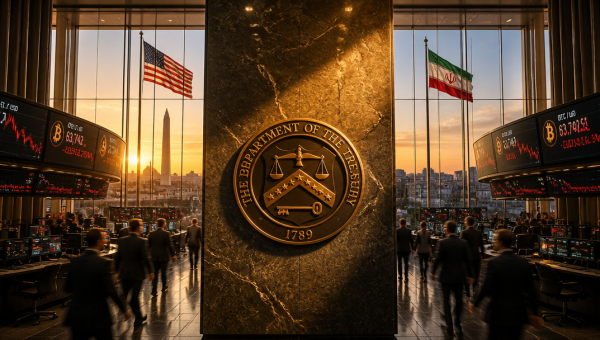
Nobitex, Wallex, Bitpin, and Ramzinex targeted under “Economic Fury” campaign
The US Treasury sanctioned four Iranian crypto exchanges on June 3, including Nobitex, the country’s largest platform, as part of its “Economic Fury” campaign to isolate Iran’s financial system.
The Office of Foreign Assets Control (OFAC) added the exchanges and their executives to its sanction list, prohibiting US businesses and persons from providing services to the platforms. Nobitex’s CEO Seyed Ali Khoee and chairman Amir Hossein Rad were also designated. The other three exchanges targeted were Wallex, Bitpin, and Ramzinex.
Nobitex handles approximately 50% of Iran’s crypto trading volume, making it the country’s dominant platform. Treasury Secretary Scott Bessent framed the action as part of a broader effort to disrupt Iranian financial operations. “While Iran’s economy is in free fall, the regime has chosen to co-opt digital asset technologies for its own corrupt agenda, including evading sanctions and transferring wealth out of the country,” Bessent said in a statement.
The sanctions announcement followed a May 30 disclosure by Bessent that the US had seized nearly $1 billion in crypto from Iranian exchanges and wallets since late February. That seizure campaign began after joint US-Israeli strikes on Iran in February, which triggered the broader Iran war.
The “Economic Fury” campaign commenced on April 14, months into the conflict. Treasury has targeted alleged shadow bank networks, foreign officials, and companies supporting Iran’s oil trade and military activities as part of the initiative. One of Treasury’s stated top priorities is ending Iran’s nuclear program.
“As promised, Treasury will continue to follow the money in support of Economic Fury, whether it is through the banking system or through digital assets, to prevent the regime from developing a nuclear weapon,” Bessent said.
The campaign reflects Treasury’s expanded focus on crypto as a sanctions evasion channel. Blockchain forensics firm Chainalysis has documented Iranian use of digital assets to circumvent traditional financial restrictions. Treasury actions have cut off tens of billions of dollars in funding channels from the Iranian regime and its proxies, according to official statements.
The US has repeatedly struck Iran amid ongoing efforts to reach a ceasefire agreement and resolve a dispute over the Strait of Hormuz, through which one-fifth of the world’s oil transits. Treasury officials indicated the sanctions on crypto exchanges represent an escalation of financial pressure designed to force regime compliance on nuclear matters.