Circle’s Chief Commercial Officer Kash Razzaghi published a defense of the stablecoin issuer’s profit retention model on October 17, as rival networks backed by major crypto firms move to distribute reserve income directly to partners.
Razzaghi argued that Circle’s approach, which retains approximately 7 cents of net profit per revenue dollar earned in the first half of 2026, funds essential operational costs that competitors cannot simply eliminate. “The costs of redemption, compliance, and resilience don’t disappear just because the issuer declined to pay them,” Razzaghi said.
Circle generated approximately $1.4 billion in total revenue during the first half of 2026. The company allocated $819 million to distribution and transaction costs, $473 million to compliance, liquidity, and product development, and $214 million to stock-based compensation and related expenses.
Open USD and Rival Models
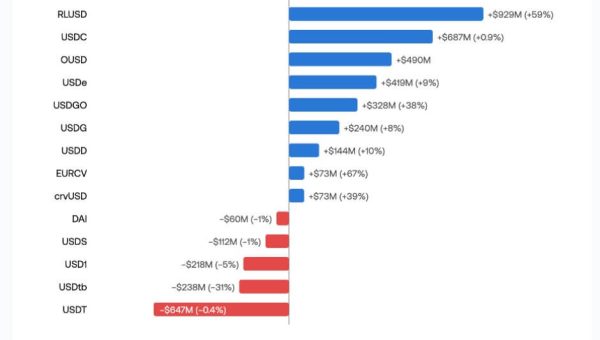
Open USD, unveiled in June 2026, operates under a different premise. The network allows businesses to mint and redeem stablecoins without fees while passing reserve income to participants after deducting a management fee. Open USD’s OUSD token is now live.
Coinbase, Circle’s largest USDC distribution partner, backs Open USD alongside Stripe and BlackRock. This alignment underscores the tension between Circle’s centralized profit model and emerging decentralized income-sharing approaches.
Paxos leads the Global Dollar Network (USDG), which also shares reserve income with participants after management fees. Both rival networks represent a structural challenge to Circle’s business model.
Circle’s Operational Defense
Circle stated that standard USDC redemptions remain free and typically settle within two business days. Qualifying platform customers and payment flows through Circle Payments Network can access near-real-time redemptions at no cost. The company framed these offerings as evidence that it already provides low-cost access despite retaining reserve income.
In September 2026, Binance purchased a $100 million stake in Circle as part of a five-year deal that ties fees to USDC held through Circle’s wallet service. The investment signals confidence in Circle’s model even as competition intensifies.
Razzaghi’s October 17 statement represents Circle’s most direct public response to the income-distribution model championed by Open USD and the Global Dollar Network, positioning operational resilience as a justification for profit retention rather than distribution.