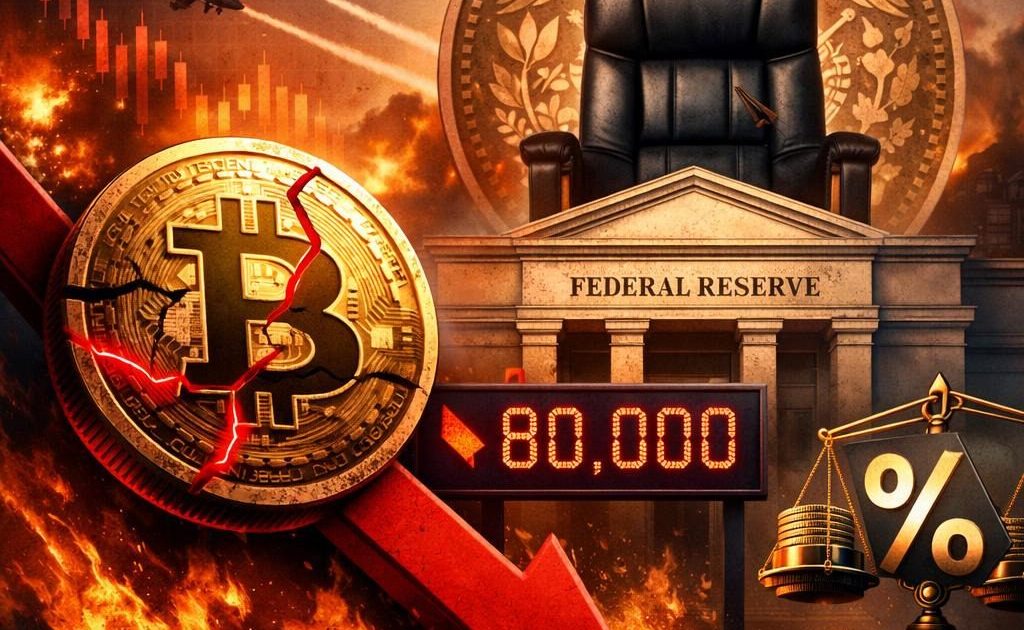
Bitcoin fell below its $80,000 support level on Wednesday following Kevin Warsh’s confirmation as Federal Reserve chair, marking a critical moment for crypto markets dependent on monetary policy direction. Warsh becomes the first Fed chair with personal cryptocurrency holdings, yet his appointment has deepened market uncertainty about whether the central bank will cut rates or hold firm against sticky inflation.
Warsh Confirmation Intensifies Rate Cut Debate
Warsh’s ascension to the Fed chair role introduces a rare crypto-friendly face into the world’s most influential monetary authority. Market strategist Sam Daodu has noted that Warsh has referred to Bitcoin as “the new gold for people under 40,” signaling openness to digital assets that previous Fed leadership lacked. However, Warsh has maintained a hawkish stance on quantitative easing and inflation control. This tension between his personal crypto interest and his inflation-fighting record creates conflicting signals for traders. The confirmation itself was overshadowed by the immediate BTC pullback, suggesting markets are pricing in caution rather than optimism around his policy direction.
Bitcoin Faces Competing Technical and Macro Pressures
Bitcoin’s break below $80,000 comes as Fed rate expectations remain split. CME FedWatch data shows a 70% probability the Fed will hold rates at 3.50%-3.75% through June’s FOMC meeting, while markets price in a 39% chance of a rate hike and just 28% odds of a 25 basis point cut. The current inflation rate sits at 3.8%, well above the Fed’s 2% target. If Bitcoin rebounds, analysts expect resistance at $82,000-$85,000, with a potential surge zone between $85,000-$88,000. The 200-day moving average sits near $78,000, offering a secondary support floor. Edward Jones economist James McCann stated that “spiking inflation will leave the Fed firmly on the sidelines for his first few meetings and potentially through the rest of 2026,” suggesting Warsh may prioritize price stability over rate relief.
Warsh’s Hawkish History Clashes With Trump’s Cut Agenda
The appointment creates an ideological friction point. President Trump has publicly advocated for aggressive rate cuts to stimulate economic growth, but Warsh’s track record suggests he may resist political pressure if inflation remains elevated. His personal Bitcoin holdings could theoretically make him more sympathetic to crypto market concerns, but his QE skepticism and inflation focus indicate he will not subordinate monetary stability to asset price support. This dynamic leaves the crypto market without clear policy tailwinds and exposes it to volatility if inflation data surprises to the upside.
Next Inflection Point: June FOMC Dot Plot Revision
Warsh’s first major policy signal will come at June’s FOMC meeting, where the Fed revises its rate path projections via the dot plot. Markets are currently pricing a hold, but if Warsh signals hawkish resolve despite pressure from Trump and crypto advocates, Bitcoin could face additional downside toward $78,000. Conversely, if inflation data cools and Warsh hints at future cuts, the $85,000-$88,000 resistance zone becomes a realistic target. The next 90 days will determine whether Warsh’s crypto credentials translate into dovish policy or remain merely personal conviction.