Regulatory window narrows for crypto market-structure bill
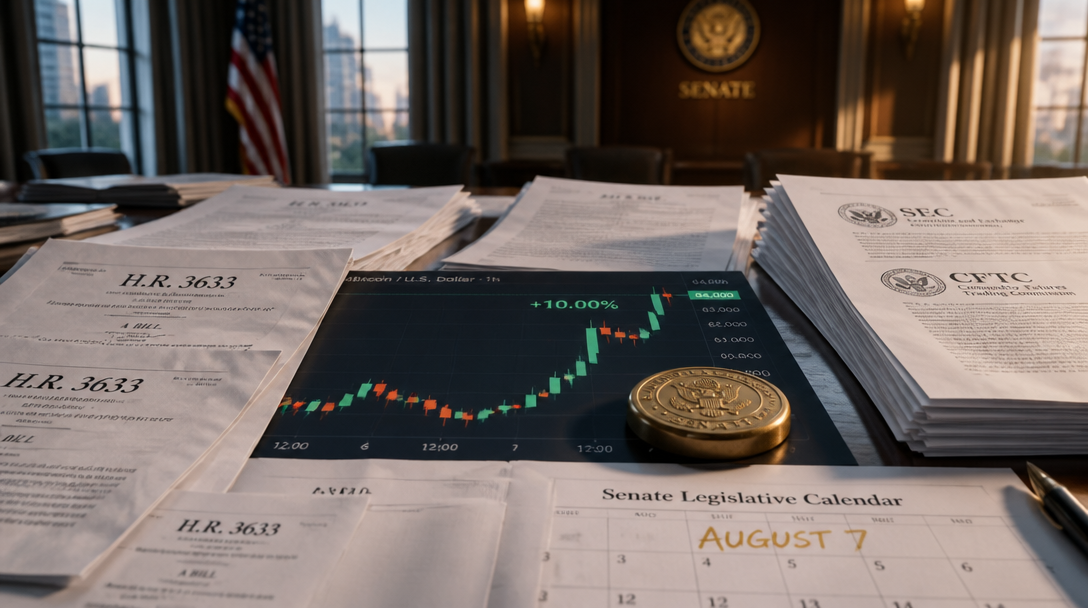
The US Senate has 20 working days until Aug. 7 to vote on the Digital Asset Market Clarity Act (H.R. 3633), a bill designed to establish federal oversight of digital assets and clarify the split between SEC and CFTC authority. The compressed timeline has emerged as a potential market catalyst, with Bitcoin rebounding about 10% this month and briefly trading above $64,000.
The bill advanced out of Senate Banking Committee on May 14 by a 15-9 vote and sits at Calendar No. 423 on the Senate Legislative Calendar, meaning it is formally available for floor action. The House passed its version on July 17, 2025 by a 294-134 vote, with more than 70 Democrats crossing party lines. Senate Majority Leader John Thune has not yet allocated floor time, and no cloture motion has been filed.
White House crypto adviser Patrick Witt had publicly targeted July 4 as the date for the bill to be signed into law, a deadline that passed. The Senate returns from recess on July 13. Kristin Smith, president of the Solana Policy Institute, urged lawmakers to focus on the week of July 20.
The bill includes Section 604, which shields developers and blockchain infrastructure providers from money-transmitter rules when they do not control customer funds. The National Organization of Black Law Enforcement Executives endorsed the bill last week. The Major County Sheriffs of America recently shifted to a neutral position after earlier expressing discomfort with Section 604 language.
Passage faces competing pressures. Democrats have intensified demands for ethics restrictions on elected officials and their families profiting from digital asset ventures, citing Trump’s financial disclosures showing more than $1 billion in crypto-related income last year, including hundreds of millions tied to the TRUMP memecoin. Republicans want legislation focused on market structure rather than ethics provisions.
Sen. Elizabeth Warren of Massachusetts, the top Democrat on Senate Banking Committee, stated: “Any crypto legislation that does not stop Donald Trump and his family from continuing to profit off of crypto is failing the American people.”
Sen. Ruben Gallego of Arizona, a Democrat whose continued support depends on a strong ethics agreement, has become a focal point in negotiations. The compressed timeline creates tension between Democratic and Republican priorities.
James Thorne, chief market strategist at Wellington Altus, said the bill “[accelerates] institutional adoption and clears the regulatory runway for Bitcoin to migrate from speculative asset to primary collateral and, eventually, de facto legal tender in a system that increasingly has to meet Bitcoin on its own terms rather than marginalize it.”
Betting odds on Polymarket shifted after law enforcement groups adjusted their positions. The probability that the bill will be signed into law in 2026 stood at 55% before traders refocused on the short calendar, then fell to 45%.
The bill has advanced further than any previous US crypto market-structure effort. The Senate’s final scheduled working day before the August break is Aug. 7. A 60-vote threshold is needed to overcome a filibuster.