Banking Practice Contradicts Government Guidance
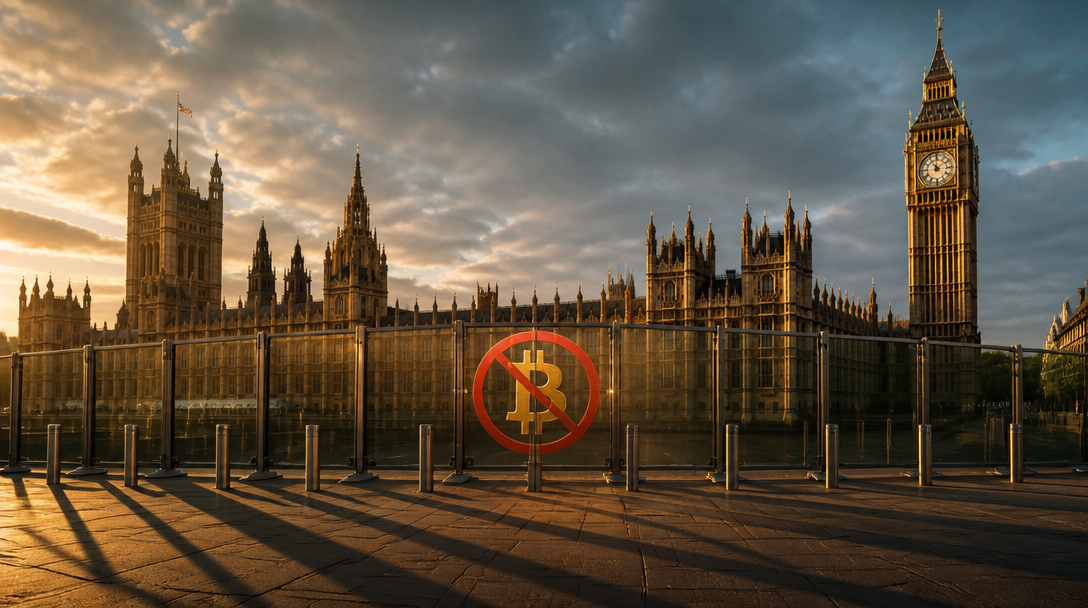
Bitcoin Policy UK submitted evidence to a parliamentary inquiry on August 23 documenting that approximately 40% of bank-to-exchange transfers for bitcoin activity are being blocked or delayed across Britain. The advocacy organization told the Crypto and Digital Assets APPG that the restrictions persist despite government direction since 2023 that banks should assess bitcoin activity on a case-by-case basis rather than impose blanket sector bans.
“Almost three years after we first raised blanket banking restrictions with the City Minister, our evidence to the Crypto and Digital Assets APPG inquiry shows the problem hasn’t improved. Roughly 40% of bank-to-exchange transfers in the UK are currently blocked or delayed,” Bitcoin Policy UK said in a statement.
The submission documents a widening gap between policy and practice. Virgin Money, Metro Bank, Starling Bank, TSB, and Chase UK block transfers and card payments outright, according to Bitcoin Policy UK. Barclays and HSBC impose per-transaction caps of £2,500 (approximately $3,400).
Survey Data Reinforces Pattern
A January 2025 joint survey by the Startup Coalition, UK Cryptoasset Business Council, and Global Digital Finance found that 50% of UK fintech and crypto firms were either refused a bank account or had one closed. Among firms that managed to retain banking relationships, only 14% held accounts with one of the nine largest UK banks.
An August 2025 survey by IG Group showed that 40% of active crypto investors reported having a payment blocked or delayed by their bank.
Exchanges reported no improvement. None of the exchanges surveyed in the January 2025 study reported an improvement in restrictions, and 80% of exchanges reported that restrictions had increased over the previous year.
Policy Framing and Implementation
UK policy currently treats “crypto” as a single regulatory category, causing bitcoin to be caught by rules written for unbacked tokens and issuer-dependent stablecoins, according to Bitcoin Policy UK. The organization notes that most firms surveyed in January 2025 were UK-based operations rather than firms with no domestic presence, suggesting the restrictions affect established domestic businesses.
City Minister Lucy Rigby stated in December 2025 that the UK should “without a doubt” compete with the United States and become an international hub for cryptoassets. Bitcoin Policy UK’s parliamentary submission underscores a disconnect between that stated ambition and current banking practice.
The UK is scheduled for full implementation of its cryptoasset regime in 2027. Bitcoin Policy UK filed four specific requests with the Crypto and Digital Assets APPG as part of its evidence submission to the inquiry.