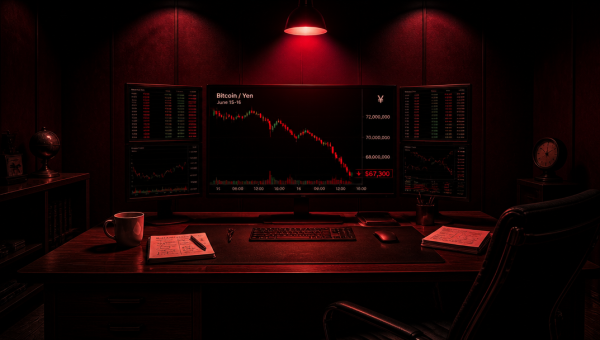
The U.S. nonfarm payrolls report due Friday, May 9, will determine whether bitcoin holds its $77,500 support level or breaks into a deeper correction. Markets expect only 62,000 jobs added in April—a sharp deceleration from March’s 172,000—but wage growth acceleration to 3.8% year-on-year threatens to complicate the dovish narrative that would normally support bitcoin.
Weaker Jobs, Stickier Wages Create Policy Paradox
A sub-100,000 payrolls print typically signals Fed rate holds, the condition that has historically supported risk assets like bitcoin. March’s 172,000 additions already trended weak. Yet average hourly earnings are expected to rise from 3.5% to 3.8% year-on-year, signaling persistent wage pressure even as hiring slows. This combination—soft labor demand paired with sticky inflation—creates a stagflation signal that complicates the Fed’s policy calculus. The Federal Reserve currently faces no pressure to cut rates, and markets price steady rates through 2026 followed by potential hikes in 2027. Oil prices just above $100 per barrel amplify inflation concerns. As QCP Capital noted, “the gap between that pricing and the equity market’s willingness to fade every escalation is the week’s defining contradiction.”
Bitcoin Trapped Between Support Levels as Institutional Demand Cools
Bitcoin has retreated to $79,000-$80,000 after breaching its 200-day moving average downward and briefly entering overbought territory. The asset now trades near the upper boundary of its current uptrend channel, with the lower boundary at $77,500 and critical support around $75,000. A break below $75,000 would signal a broader trend break. Institutional demand has stalled: the Coinbase Premium Index, which tracks U.S. institutional buying pressure, has flipped to a discount despite repeated support attempts at $80,000. Record S&P 500 call options volume at $2.6 trillion suggests equity markets are hedging downside risk, not pricing continued rallies. Alex Kuptsikevich at FxPro stated: “Bitcoin has returned below $80K, extending its retreat from the 200-day moving average after briefly entering overbought territory near the upper boundary of its uptrend channel.”
Geopolitical Oil Risk Compounds Inflation Narrative
The Strait of Hormuz normalization probability stands at 97% for no resolution by May 15, keeping crude volatility elevated. Higher oil prices reinforce stagflation fears—the scenario where weak growth meets persistent inflation, typically negative for both stocks and crypto. If crude fails to de-escalate before the Fed’s April meeting minutes release on May 20, the stagflation narrative hardens further. This dynamic reverses the traditional payrolls-to-bitcoin correlation: weak jobs would normally support rate holds and rally risk assets, but wage stickiness plus geopolitical oil pressure could trigger a flight to safety instead. Coinbase and offshore exchanges including Binance will process significant volatility Friday, with institutional traders already reducing long positions.
Next 48 Hours Will Test Market Conviction on Rate Path
The May 9 payrolls print will be the market’s first major test of whether the Fed’s implicit rate-hold guidance survives wage acceleration data. A print below 50,000 paired with weak wage data could trigger a bitcoin rally back toward $82,000-$85,000. A print above 100,000 combined with wage growth above 4.0% would likely push bitcoin toward the $75,000 support floor. The unresolved variable is the wage growth threshold—no analyst consensus exists on what earnings growth rate is “soft enough” to maintain dovish Fed pricing. May 20’s FOMC minutes release will follow, offering the Fed’s post-payrolls stance.