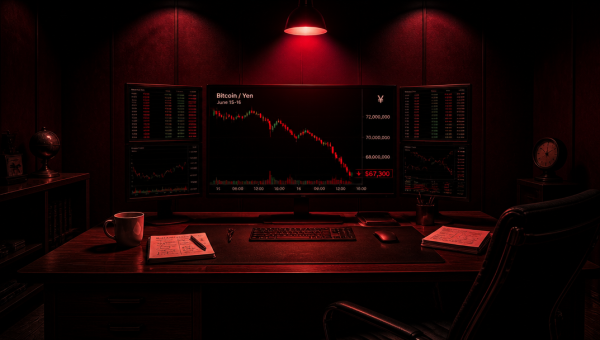
Bitcoin surged past $80,000 on May 4 for the first time since late January, breaking a critical 21-week trend line as traders clash over whether the move signals a genuine bull base or a bear flag setup. The $80,617 high on Bitstamp arrived alongside $630 million in net inflows to US spot Bitcoin ETFs on Friday, resetting onchain momentum indicators after a brutal correction to $60,000 in early February. The timing coincides with mounting Federal Reserve dissent—four FOMC members opposed the easing bias language in recent statements—suggesting the rate-cut cycle has stalled, potentially removing a headwind for risk assets.
Traders Divided on Bear Flag Structure
The technical setup has fractured analyst consensus. Michaël van de Poppe argues the breakout above $79,000 “opens the opportunities all the way towards $86-88K for the coming period,” with a bull case extending to $92,000-$95,000 without breaking the bear market trend. BitBull counters that the bear flag is “very close to completion,” while Crypto Storm warns a break below $80,000 could trigger a 30-40% downside move. Jurrien Timmer, Fidelity’s Director of Global Macro, offers a middle view: the recovery off the $60,033 low resembles a bear flag structurally, but Bitcoin may be “building a large base in preparation for the next major up wave.” Jeff Sun, who has been accumulating via ETF since early March, disputes the bear flag thesis entirely, emphasizing that spot has “reclaimed $80,000 for the first time since January 31.”
Onchain Signals Flash Caution at Valuation Levels
Bitcoin’s MVRV Ratio—which measures market value against realized value—now sits at 1.45, one of its highest readings since the start of 2026, according to CryptoQuant contributor Arab Chain. At the February $60,000 low, the ratio stood at 1.1, meaning current valuations have expanded significantly. Arab Chain notes this “reflects a clear improvement in Bitcoin’s market valuation relative to its realized value,” but warns the market remains vulnerable if momentum falters. The $630 million Friday ETF inflow provided institutional bid support, yet traders acknowledge the move occurs amid macroeconomic headwinds: Brent crude oil has tested its March and April highs three times in the past month and been rejected each time, suggesting commodity bulls have fully priced in geopolitical risk. Even Goldman Sachs, the most war-bullish major bank, forecasts Brent averaging just $85 per barrel despite current trading near $112.
Fed Leadership Transition Adds Uncertainty
Kevin Warsh takes over as Federal Reserve Chair on May 15, replacing Jerome Powell. The timing matters: four FOMC members dissented on recent meeting language indicating an easing bias, the highest dissent count since the early 1990s. Mosaic Asset Company noted dissent centered on the easing language itself, signaling hawkish resistance to rate cuts. If inflation re-accelerates in coming months, stock valuations could face “significant pressure,” potentially dampening the risk appetite that has driven Bitcoin higher. The near-term test remains whether Bitcoin holds above $80,000 with a clean daily close—the technical signal that would “flip things bullish again” according to Crypto Storm. Targets between $86,000 and $95,000 hinge on this level holding, while a break below $80,000 reopens the path to the $60,000 zone.