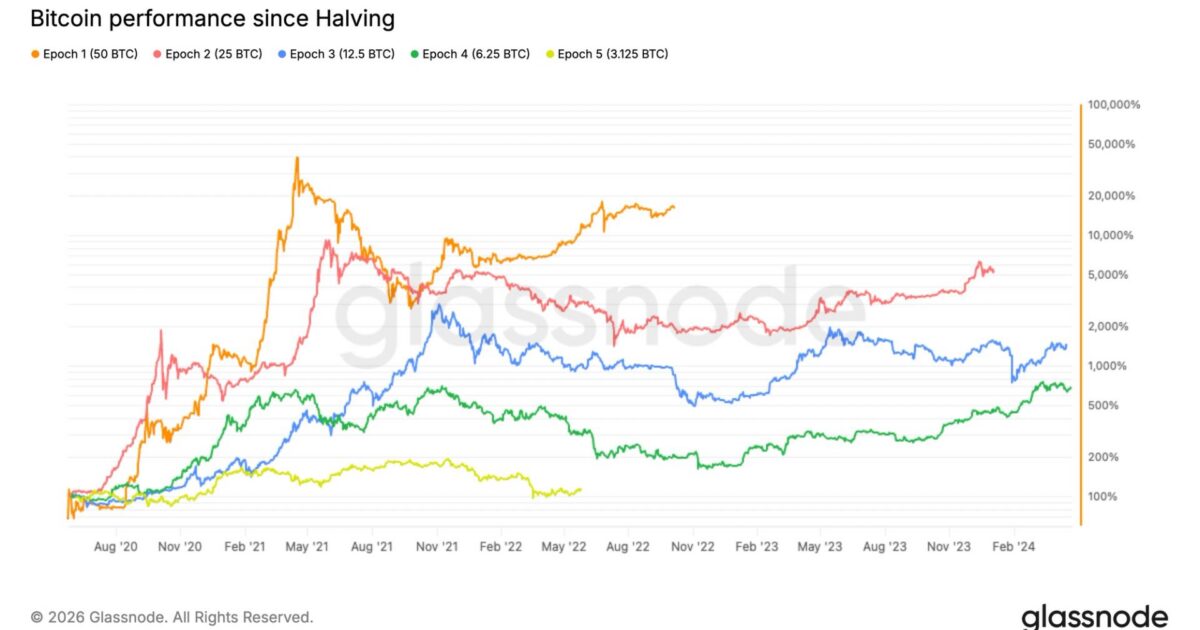
Bitcoin’s recent price trends reveal a distinct pattern as the cryptocurrency has crossed the halfway point in its halving cycle. Unlike previous cycles, the current price gains are noticeably slower, signaling a shift in how the market responds to these events. This trend suggests that Bitcoin is maturing as an asset class, moving away from the explosive price surges that characterized earlier periods.
The slower appreciation in Bitcoin’s price is notable for investors who typically anticipate significant gains following halving events. Each halving historically reduced the rate at which new Bitcoin enters circulation, often leading to price increases as supply diminishes. This time, however, the market appears to be behaving differently. The change could reflect a growing acceptance of Bitcoin by institutional investors and a broader market that may prioritize sustainability over sheer price speculation.
Data from CoinDesk indicates a measured response from traders, as Bitcoin’s volatility has decreased compared to past cycles. The current average price increase following the halving has not matched the explosive rallies of earlier years. Analysts speculate this could be indicative of a market that is solidifying Bitcoin’s role as a store of value, rather than a speculative asset subject to extreme fluctuations. This transformation might be altering trader expectations and strategies as the market matures.
Investors should keep an eye on Bitcoin’s price as it navigates this more tempered growth phase. A significant benchmark to watch will be the $30,000 mark, an important psychological level that, if crossed, could indicate a renewed bullish sentiment. As the market evolves, understanding these dynamics will be key for those looking to make informed decisions.