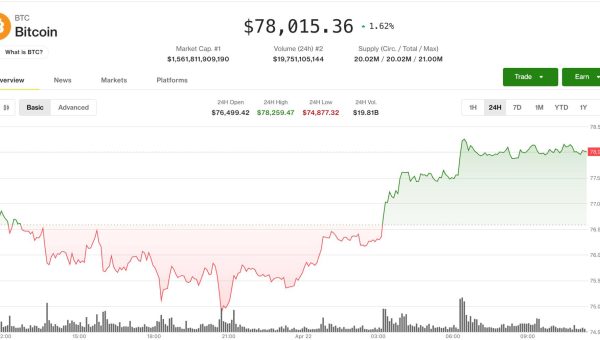
Bitcoin recently reached a price of $78,000, reflecting a notable increase amid escalating Brent crude oil prices. On April 21, Brent crude surged by 5.4%, closing at $99.89 after hitting an intraday peak of $102.16. This significant rise in oil prices came as shipping through the crucial Strait of Hormuz faced disruptions, with only three vessels making the transit in the previous 24 hours, compared to an average of around 140 ships before the ongoing conflict.
The sharp increase in oil prices has broader implications for commodities and energy markets. As fuel costs rise, businesses and consumers start to feel the pinch. This development impacts inflation rates and can lead to increased interest in alternative asset classes like Bitcoin. Traditionally, Bitcoin serves as a hedge against inflation, gaining appeal as traditional asset values fluctuate. The current dynamics present an intriguing scenario for investors navigating the complexities of both the oil market and cryptocurrency.
Market activity reflects this dual influence. The surge in Bitcoin’s price coincides with a period of heightened volatility in oil. Analysts will be closely monitoring these trends, looking for correlations between energy prices and Bitcoin’s performance. Trading volumes for Bitcoin have likely increased, as investors reassess their portfolios in light of these developments. Oil’s price movements often signal broader economic conditions, prompting traders to adjust their strategies in response.
In the coming days, the oil market will be pivotal to watch. Investors should pay attention to Brent crude’s performance as it approaches the $100 mark, along with the number of vessels transiting the Strait of Hormuz. A sustained increase in oil prices could further influence Bitcoin’s trajectory, with traders keen to see if Bitcoin can maintain its bullish momentum amid rising energy costs.