European local-currency settlement gains a regulated alternative to dollar dominance
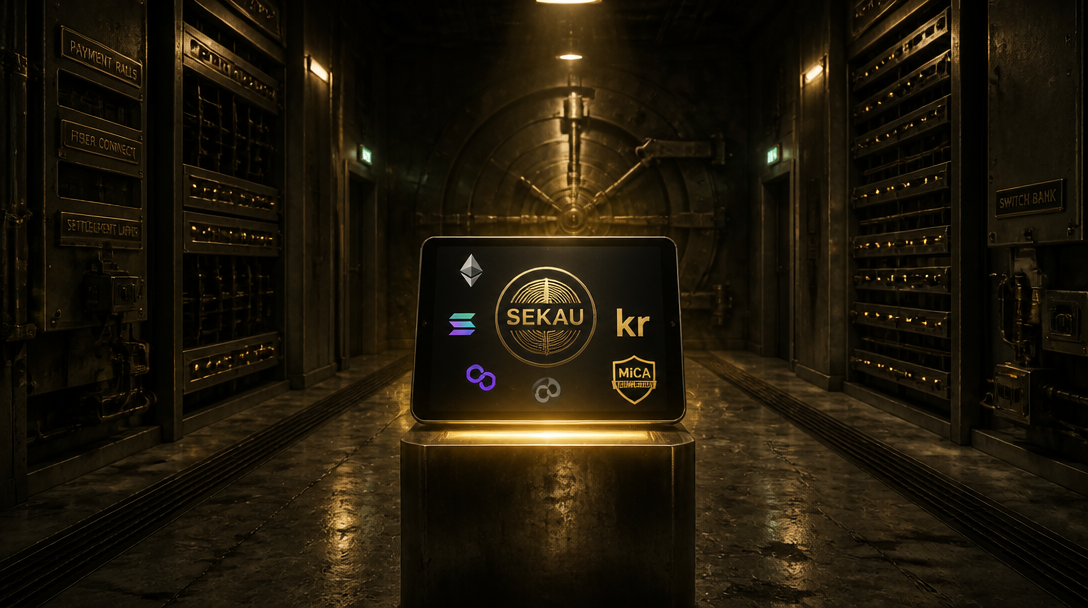
AllUnity launched SEKAU on June 19, a Swedish krona stablecoin positioned as the first fully reserved and MiCA-compliant krona-backed E-Money Token. The asset deploys across five blockchains: Ethereum, Solana, Base, Tempo, and Polygon.
SEKAU operates as a 1:1 redeemable token backed by segregated reserves, with Banking Circle designated as the reserve and transaction bank. Marginalen Bank serves as the additional banking partner. The structure targets treasury, settlement, and business payment use cases rather than consumer speculation.
The launch addresses a structural gap in European on-chain infrastructure. According to a 2026 Sveriges Riksbank payments report cited in the source materials, no Swedish-krona stablecoins existed prior to SEKAU’s deployment. Dollar-denominated stablecoins, including USDT and USDC, currently dominate on-chain payments and command larger market caps and deeper liquidity than local-currency alternatives.
AllUnity operates within the EU’s MiCA regulatory framework, which provides the legal structure for E-Money Tokens but does not guarantee market adoption. The company already issues EURAU, a euro stablecoin, and CHFAU, a Swiss franc stablecoin, establishing a pattern of local-currency issuance across the region.
SEKAU’s launch occurs alongside Sweden’s domestic instant payment infrastructure, RIX-INST, which offers 24/7 instant settlement in central bank money. The combination of on-chain stablecoin rails and legacy instant-payment systems creates optionality for corporate and institutional users seeking SEK-denominated settlement without currency conversion friction.
AllUnity’s sponsors include DWS, Flow Traders, and Galaxy, signaling institutional backing for the product. The Swedish central bank (Sveriges Riksbank), EU supervisory authority (ESMA), and European Banking Authority (EBA) operate within the regulatory perimeter governing the token’s operation.
The launch represents a test case for whether local-currency stablecoins can capture meaningful settlement volume in markets where dollar-denominated alternatives have established liquidity and network effects. MiCA compliance removes regulatory uncertainty but does not resolve the fundamental challenge: dollar stablecoins have larger ecosystems, deeper order books, and entrenched usage patterns across DeFi and cross-border payment flows.
AllUnity did not disclose initial circulating supply, holder count, post-launch transaction activity, or the composition of SEKAU’s reserve backing. The company also did not name public trading venues supporting SEKAU at launch or confirm whether each blockchain deployment has developed meaningful SEKAU liquidity.
What happens next
Adoption will depend on whether institutional clients, corporate treasurers, and payment processors integrate SEKAU into their settlement workflows. Dollar stablecoins remain the default for on-chain payments; local-currency alternatives must demonstrate cost, speed, or regulatory advantages to displace them.