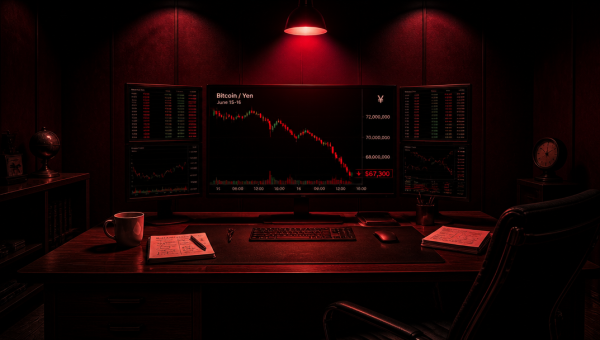
Bitcoin traded near $77,000 Friday as Kevin Warsh officially assumed the Federal Reserve chairmanship amid conflicting economic signals that complicate rate-cut expectations. University of Michigan data released the same morning showed consumer sentiment collapsed to 44.8, the lowest level in months, while inflation expectations surged to their highest in years. The stagflationary backdrop—weak demand paired with rising prices—creates a policy dilemma for the incoming Fed chair, appointed by President Trump with an implicit expectation of rate cuts.
Consumer Confidence Crumbles as Inflation Reignites
The University of Michigan Consumer Sentiment Index fell to 44.8 from 48.2, missing the 48.2 forecast and signaling deteriorating household confidence. More alarming: the Expectations Index hit a record low of 44.1, reflecting deep pessimism about future economic conditions. Simultaneously, one-year consumer inflation expectations jumped to 4.8% from 4.5%, while five-year inflation expectations climbed to 3.9% from 3.4%. The divergence reveals a trapped consumer—expecting weaker economic activity but higher prices. Oil price pressures from geopolitical tensions have reignited inflation concerns that appeared to be cooling earlier in the cycle, complicating the traditional playbook for rate cuts.
Rate Hike Odds Surge Despite Fed Leadership Transition
Market pricing shifted dramatically following the data release. Fed funds futures now price a greater than 70% probability of at least one rate hike by the end of 2026, a sharp reversal from earlier expectations of continued cuts. Equity markets absorbed the news with modest gains—the Nasdaq rose 0.3% and the S&P 500 climbed 0.4%—suggesting investors remain cautious about the inflation-growth tradeoff. Bitcoin’s stability near $77,000 throughout the week indicates the asset has largely priced in the policy uncertainty, though the stakes for Fed decision-making have clearly shifted higher. Warsh’s appointment was framed around rate relief, yet the economic data arriving on his first day as chairman presents a harder case for aggressive easing.
Stagflation Reshapes Fed Policy Calculus
Stagflation—the combination of weak growth signals and rising inflation—poses a structural challenge to monetary policy. Unlike pure inflation or pure recession, stagflation offers no clear solution: rate cuts risk further price acceleration, while rate hikes threaten already-fragile consumer sentiment and economic activity. Warsh enters the role with limited flexibility. The record-low expectations index suggests households are losing faith in near-term recovery, yet inflation expectations remain sticky, indicating the Fed cannot simply cut its way out of this dynamic. For crypto markets, stagflation typically creates bifurcated outcomes—some traders rotate toward hard assets like Bitcoin as inflation hedges, while others reduce risk exposure due to slowing growth. Bitcoin’s current consolidation reflects this tension.
Next Test: 2026 Rate Cycle and Warsh’s First Policy Decision
Warsh’s immediate priorities are now clarified by Friday’s data. The >70% rate hike probability through end-2026 signals markets expect at least one tightening cycle under his tenure, contradicting initial Trump-era rate-cut narratives. The incoming Fed chair must reconcile stagflationary pressures while managing expectations set during his appointment. Bitcoin traders will monitor both the Fed’s official communication and broader inflation data for signals of whether the rate-hike pricing holds or reverses. The next major decision point arrives when the Fed convenes to formally set policy under Warsh’s leadership.