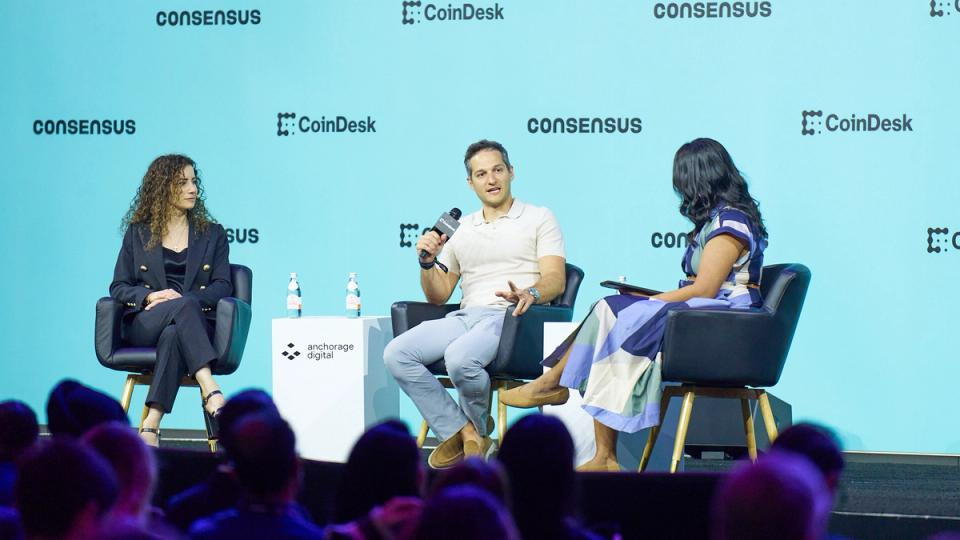
Google Cloud launched the Agentic Payments Protocol (AP2) at Consensus Miami with 120+ partners, addressing a structural gap: artificial intelligence agents cannot access traditional bank accounts. The protocol enables machine-readable payments for autonomous agents operating in commerce, marking the first major push to standardize how AI systems transact with merchants. PayPal, which operates the PYUSD stablecoin, joined as a core partner alongside enterprises and infrastructure providers.
Why AI Agents Need Crypto Rails
Richard Widmann, Global Head of Web3 Strategy at Google Cloud, stated the constraint plainly: “An agent cannot get a bank account. It’s not hard, it just is impossible.” Banks require legal personhood and identity verification—frameworks that do not accommodate autonomous software. Crypto infrastructure bypasses this bottleneck. Widmann noted that “crypto is a fantastic machine readable interface for payments,” eliminating friction between agent logic and settlement. The timing reflects real merchant readiness: a recent PayPal survey found 95% of merchants report AI agent traffic, yet only 20% maintain machine-readable product catalogs needed for autonomous purchasing.
AP2 Architecture and Partner Ecosystem
The Agentic Payments Protocol operates as an open standard—Google donated it to the FIDO Foundation to mirror the governance model of the Linux Foundation. The protocol incorporates multi-party custody mechanisms requiring 2-3 key shards, preventing any single agent from unilaterally moving funds. PayPal’s May Zabaneh, SVP and General Manager of Crypto, framed the challenge: “Merchants need to be ready for this next era.” The 120+ partners span cloud providers, payment networks, and merchant platforms. However, specific rollout timelines and details on PYUSD integration remain undisclosed.
Agentic Commerce and Liability Gaps
Agentic commerce represents the next shift after mobile-first transitions reshaped retail. Yet liability frameworks for agent-initiated purchases remain undefined. Widmann emphasized that agents “cannot simply unilaterally move action or take funds,” but the legal responsibility for fraudulent or erroneous transactions sits in a gray zone. Regulatory approval pathways for AP2 have not been detailed. These gaps could slow adoption until merchants and regulators establish clear guardrails for autonomous purchasing at scale.
What Happens Next
AP2’s rollout depends on merchant adoption of machine-readable catalogs and agent developers integrating the protocol into their systems. The 20% current adoption rate for structured product data suggests infrastructure buildout will take months. Widmann stressed that “open dialogues and open standards are really the foundation you need to build on”—a signal that competing proprietary solutions may fragment the space. The next milestone: whether regulatory bodies formalize liability rules before agentic commerce reaches production scale.