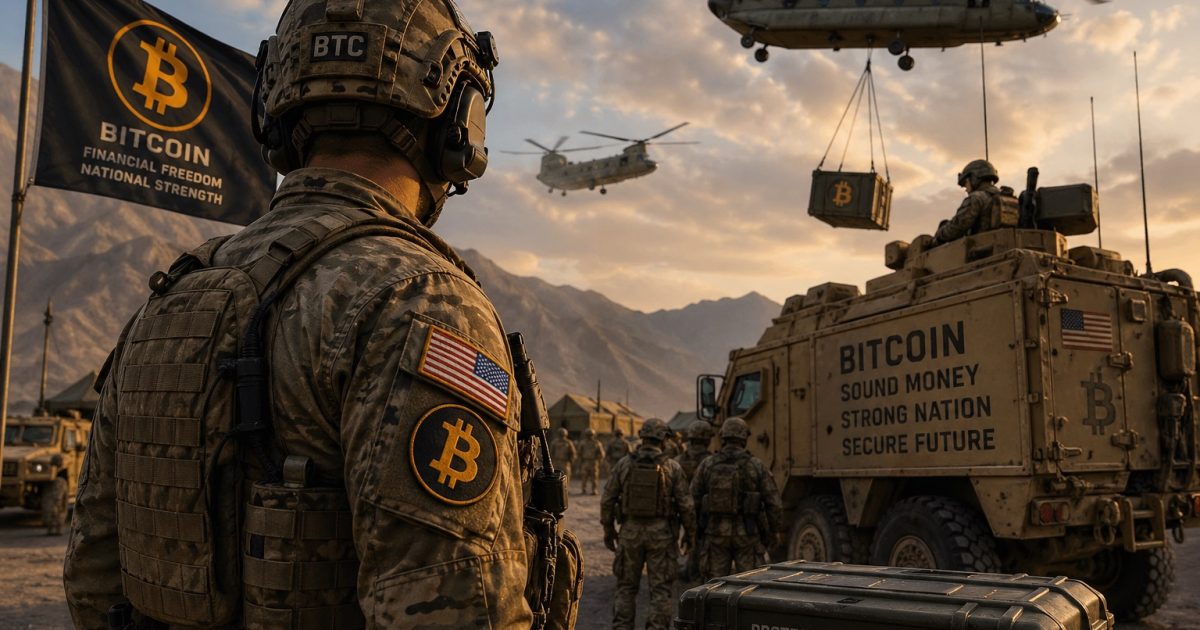
US Admiral Samuel Paparo testified before the Senate Armed Services Committee that Bitcoin could serve as a national security asset, citing its cryptographic architecture and decentralized structure as defensive advantages for military operations. Paparo, a senior official with US Indo-Pacific Command, framed Bitcoin not as a financial instrument but as a computer science tool with strategic implications for cybersecurity and defense resilience.
Bitcoin’s Architecture as Defense Mechanism
Paparo emphasized Bitcoin’s proof-of-work consensus mechanism and zero-trust peer-to-peer design as inherent security features. The network’s decentralized structure eliminates single points of failure that adversaries could target. Bitcoin’s public-key cryptography protects transaction integrity without requiring a trusted intermediary. The proof-of-work protocol creates an economically prohibitive cost to attacking the network, functioning as a computational deterrent. Paparo described Bitcoin as “a reality” with worldwide adoption, positioning the technology as already operational infrastructure rather than experimental.
Military Cybersecurity Applications
The admiral linked Bitcoin’s architecture directly to military cybersecurity resilience. Decentralized systems reduce attack vectors by eliminating centralized command structures that adversaries could compromise. The immutability of Bitcoin’s blockchain prevents tampering with critical data. Zero-trust architecture aligns with modern defense doctrine emphasizing verification over assumption. Paparo highlighted the network’s resistance to censorship and denial-of-service attacks. However, the testimony did not specify concrete military applications or propose formal integration into defense systems. The hearing focused on conceptual potential rather than operational deployment plans.
Strategic Implications Beyond Finance
Paparo’s framing signals a shift in how US defense officials view cryptocurrency infrastructure. Bitcoin national security discussions traditionally centered on reserve assets or payment systems. This testimony reframes Bitcoin as critical infrastructure for military cybersecurity doctrine. The positioning aligns with broader Pentagon efforts to harden networks against state-sponsored attacks. However, the military has not released official policy statements or formal recommendations regarding Bitcoin integration. The testimony represents early strategic positioning rather than committed defense strategy.
Unresolved Questions on Implementation
The Senate hearing did not address how the military would operationalize Bitcoin’s architecture or what specific defense capabilities would result. Cost-benefit analysis, security clearances for personnel, or regulatory coordination with financial authorities remain unspecified. Bitcoin community responses to military adoption proposals have not been formally documented. The next steps for translating Paparo’s testimony into defense policy remain unclear.