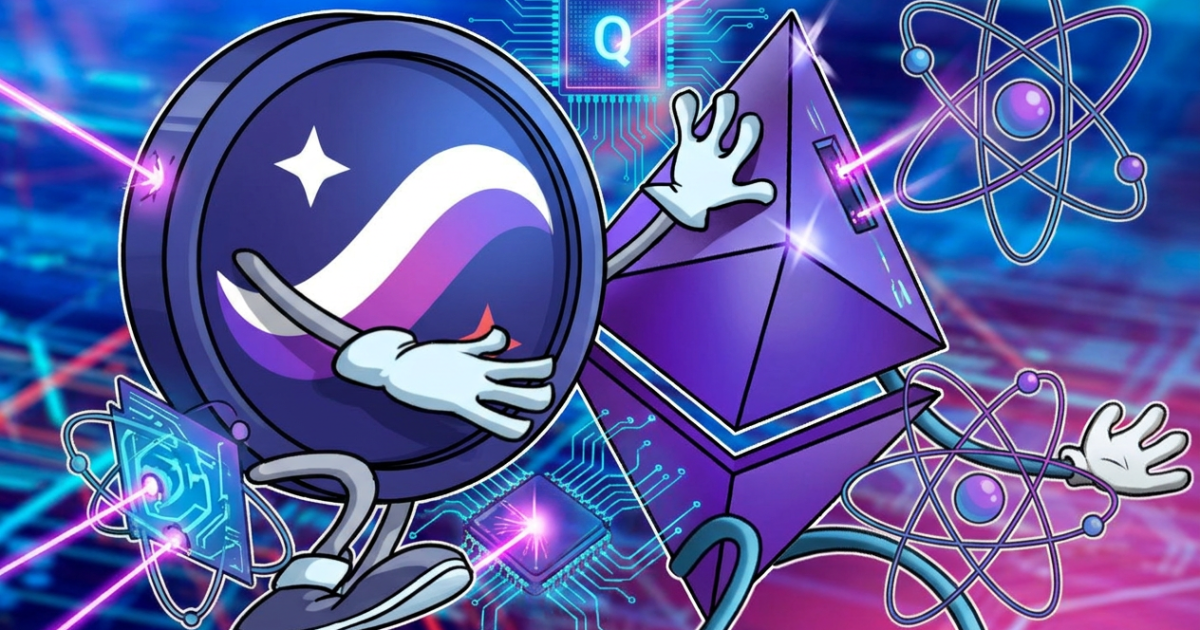
Starknet’s governance community voted overwhelmingly on Thursday to support research into transitioning the network from an Ethereum layer-2 to an independent, quantum-resistant layer-1 blockchain. The vote closed on October 22, 2026, after seven days of polling. A total of 3,200 votes were cast, with 93.52% of voting power in favor of the transition research.
The proposal, first raised by StarkWare on October 8, is non-binding. An actual transition would require a separate, binding governance vote. StarkWare, the network’s developer and operator, abstained from voting.
Eli Ben-Sasson, StarkWare CEO, said the foundation is moving quickly on technical groundwork. “We’re beginning work on a whitepaper even before we start the weekend, and hope to release a draft for public scrutiny in November,” Ben-Sasson said.
The vote reflects growing concern within the Starknet community about quantum computing’s threat to current cryptographic standards. Ben-Sasson criticized Ethereum’s quantum-safety timeline, stating: “Ethereum’s target of 2029 to become quantum-safe is too late, and deadlines slip.” Starknet has set 2027 as its target year for quantum-resistance.
Current Network State
Starknet currently operates as an Ethereum layer-2 network and uses hash-based STARK proofs. The network supports programmable accounts capable of adopting post-quantum signatures. However, Starknet’s bridge and data availability infrastructure remain dependent on Ethereum’s upgrade timeline, meaning a full transition to independence would require decoupling from those dependencies.
In June, StarkWare unveiled a three-phase quantum-resistance roadmap. The company’s Quantum Hub has tested quantum-resistant technology on Starknet’s live network, though the technology remains experimental and has not undergone security audit.
Post-Transition Details
STRK, Starknet’s native token, will remain the network’s native token. No new token is planned in connection with the transition research or any future transition itself. Existing bridges between Starknet and Ethereum will remain open following any transition.
The Starknet Foundation will oversee the research phase. StarkWare’s abstention from voting underscores the distinction between the developer team and the governance body, though both entities remain aligned on pursuing the research direction.
The whitepaper draft scheduled for November will outline technical specifications and implementation pathways for the proposed independent layer-1 architecture. The vote does not commit Starknet to a specific transition timeline or final design, only to funding research into the feasibility and design of post-quantum independence.