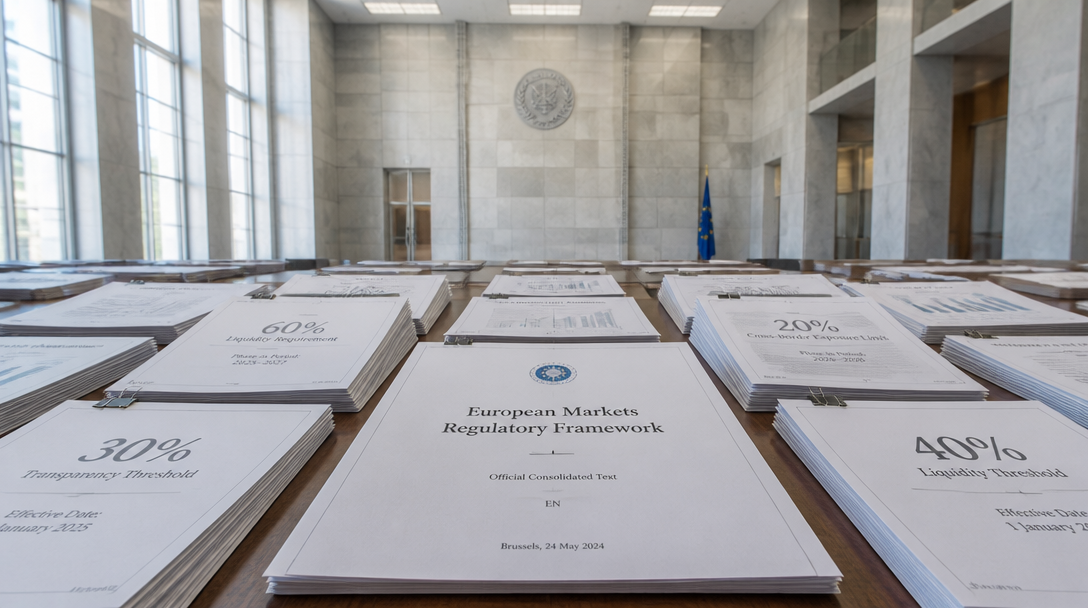
The European System of Central Banks published a response to the European Commission’s MiCA review on September 22, 2026, proposing to replace mandatory bank-deposit reserve requirements for stablecoin issuers with liquidity thresholds tied to asset maturity timelines.
Under current Markets in Crypto-Assets Regulation rules, stablecoin issuers must hold 30% of reserves as bank deposits for standard stablecoins and 60% for significant stablecoins. The ESCB argues this structure “creates a direct link between issuers and credit institutions,” generating liquidity risk for banks if a stablecoin run forces rapid deposit withdrawals.
The ESCB proposal replaces deposit mandates with liquidity requirements based on when reserve assets mature. For significant stablecoins, issuers would hold a minimum of 40% in assets maturing within one working day and 60% in assets maturing within five working days. For non-significant stablecoins, the thresholds would be 20% and 30%, respectively, across the same maturity windows.
Alternative instruments eligible under the new framework include overnight reverse repurchase agreements and short-term sovereign bonds, broadening the pool of compliant reserve assets beyond bank deposits.
Enforcement gaps flagged
The ESCB also identified “material challenges” in enforcing MiCA, noting that non-compliant crypto companies can still access EU customers despite the regulation’s licensing regime. The response does not specify which enforcement mechanisms the ESCB recommends to close this gap.
The European Banking Authority published draft rules establishing specific liquidity thresholds by stablecoin significance category in 2024. The ESCB response builds on that framework, formalizing the shift away from bank-deposit concentration toward a maturity-based liquidity model.
The ESCB did not specify a timeline for the European Commission’s decision on the proposal or clarify whether the response is binding or advisory guidance.