Aave governance has advanced a proposal to increase Bitcoin collateral loan-to-value from 73% to 81% on Ethereum Core, allowing borrowers to extract $0.81 per dollar of wrapped Bitcoin or cbBTC collateral instead of the current $0.73. The liquidation threshold would rise from 78% to 85%, compressing the price cushion before forced liquidation from 6.4% to 4.7%.
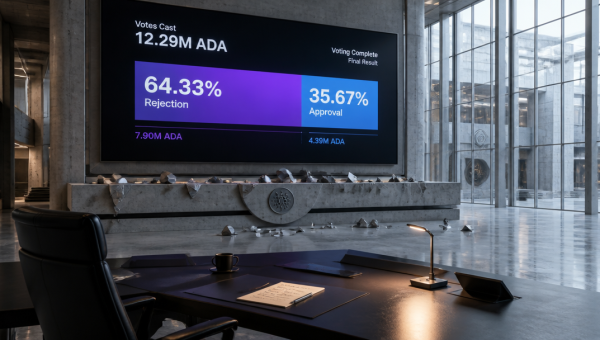
LlamaRisk, the risk service provider behind the proposal, announced on September 21 that the measure had advanced to Snapshot voting, with balloting to begin in less than 24 hours. A positive Snapshot vote would still require implementation via an Aave Improvement Proposal before activation.
Liquidation Data and Risk Framework
LlamaRisk collected liquidation data from August 2025 through August 2026 across Ethereum Core, Arbitrum, and Base. On Ethereum Core alone, the period saw 2,621 BTC liquidations that seized $358 million in collateral value. Ethereum liquidations totaled 7,206 events and $618 million in seized value.
During two stress window events in February and October 2025, liquidators cleared 100% of seized volume within five minutes, the 99th-percentile execution time. The October 2025 event generated $0.39 million in bad debt against $128 million in total seized volume.
LlamaRisk’s stress testing examined extreme price moves. The 99.9th-percentile adverse one-hour price move for Bitcoin was 5%; for ETH, 11.85%. However, the actual dataset recorded worse declines: BTC fell as much as 10.72% in a single hour, and ETH dropped 24.27%. These real moves exceeded the 99.9th-percentile stress inputs, particularly for Bitcoin.
Scope and Implementation Path
The proposal affects Bitcoin parameters on Ethereum Core and also modifies collateral settings for Arbitrum WBTC, Base cbBTC, Ethereum Core WETH, wstETH, and weETH. LlamaRisk did not disclose current collateral-enabled balances, debt distribution across accounts, or account health-factor data needed to quantify the aggregate credit exposure under new parameters.
A Snapshot approval would not directly activate the changes. Aave governance would still need to pass and implement a formal Aave Improvement Proposal to bring the new LTV and liquidation thresholds live.