Geopolitical thaw and corporate treasury buying converge ahead of Warsh’s first Fed meeting
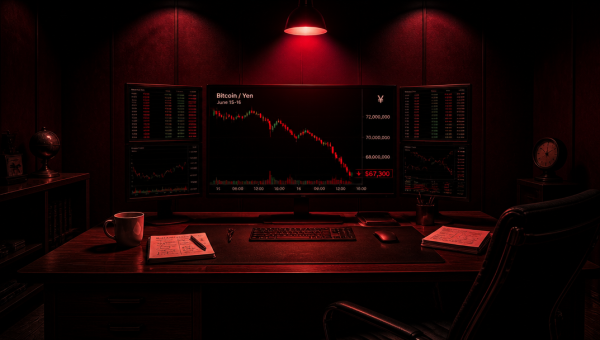
Bitcoin climbed to a two-week high near $67,000 on June 15 following Iran’s confirmation of a memorandum reopening the Strait of Hormuz and Strategy’s disclosure of a $100 million Bitcoin acquisition. The price gained 4% in 24 hours after breaking through the $64,000 resistance level on thin weekend liquidity.
Strategy acquired 1,587 BTC between June 8 and June 14, bringing its total holdings to 846,842 BTC. The company disclosed the purchase via 8-K filing on Monday, revealing the acquisition was funded through its at-the-market stock offering program. Strategy shares climbed 9% on the news, with intraday volume reaching 16.84 million shares.
Treasury-focused Bitcoin companies extended gains. Strive, chaired by Vivek Ramaswamy, surged 16% to $17.50, recovering from a three-month low of $9.00 in early April. Crypto stocks also benefited: Coinbase, Robinhood, and Circle each gained at least 5%.
Bitcoin spot ETFs recorded their first positive day in weeks. On June 12, the funds posted $85.85 million in net inflows, breaking a five-week outflow streak that had drained $1.8 billion. BlackRock’s IBIT ETF alone captured $57.69 million in inflows.
Analysts cautioned that the relief rally faces headwinds from prior false starts. “The ceasefire news pushed Bitcoin to $66,000 on thin weekend liquidity, but traders who have been burned twice already this year are not fully redeploying yet,” said Nicolai Sondergaard, Nansen Research Analyst. “The April deal collapsed, and U.S. strikes broke a second truce on June 9, with Bitcoin giving back the entire relief move both times. The market is treating June 19 in Switzerland as the real timestamp, not Sunday’s headlines.”
The Bitfinex analyst team identified a confluence of technical and macro factors supporting the move. “What the tape shows is seller exhaustion arriving at the same moment as a macro reprieve, which is a different condition from genuine demand,” they wrote. “We believe that we have a temporary bottom with multiple confluences like correlated assets drifting higher, large liquidations causing a funding and open interest reset and spot seller exhaustion with macro reprieve at the moment. However, the two major spot buyer complexes in ETFs and Treasury/DAT companies need to turn positive for BTC to catch a sustained spot bid.”
The timing aligns with Federal Reserve Chair Kevin Warsh’s first FOMC meeting, scheduled for June 16-17. The ceasefire could influence the Committee’s inflation assessment. April inflation came in at 3.8%, above the Fed’s target. The Committee is widely expected to hold rates in the 3.50% to 3.75% range.
“If the truce holds, oil retreats, the energy-led component of inflation fades, real yields and inflation breakevens ease, and the dollar’s safe-haven bid unwinds. That same chain is the clearest near-term tailwind for gold and Bitcoin,” Bitfinex analysts noted. “The agreement lands the day before the FOMC meets, the first meeting chaired by Kevin Warsh. A credible supply normalization gives the Committee cover to treat May’s spike as transitory and hold, rather than tighten into a headline print above target.”
Institutional appetite for crypto remains strong despite volatility. “Institutions love crypto. I’ve never seen more excitement from bankers and suits. You wouldn’t know it’s a bear market talking to them,” said Austin Federa, co-founder of DoubleZero.
Bitcoin remains trapped between critical support and resistance levels. Bitfinex analysts warned the asset is “trapped in the consolidation zone between these two critical levels, where it must either establish a durable support base or face a potential breakdown into a deeper leg lower.”