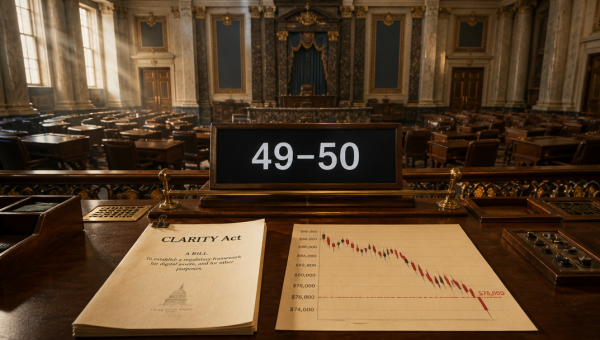
The US Senate faces a critical window to advance crypto market structure legislation before lawmakers break for recess, with industry leaders warning that delaying a vote on the CLARITY Act past June could kill the bill for years.
“June is ‘Clarity’ month. It’s literally now or never,” Mike Novogratz, CEO of Galaxy Digital, posted on X on May 30, 2026, as Senate Majority Leader John Thune confirmed that a reconciliation package would not be completed in May. The legislative calendar now forces senators to return in June with a packed agenda that includes reconciliation talks, FISA matters, and a housing package already passed by the House.
The CLARITY Act cleared the Senate Banking Committee with bipartisan support, earning a 15-9 vote. The bill now competes for floor time in a crowded June schedule. Only four working weeks remain before the Senate breaks for recess, and if the vote slips into July, lawmakers face only three working weeks before August recess begins.
Senator Cynthia Lummis of Wyoming framed the stakes in geopolitical terms. “If the United States doesn’t establish the global standard for digital asset regulation, someone else will. China is not waiting,” she said. Lummis stated that if Congress misses the June window, the next realistic opening for crypto asset legislation is likely 2030.
Treasury Secretary Scott Bessent has pushed both the Senate and House to move on the bill. President Donald Trump has publicly expressed support for policies favoring the digital asset industry, signaling executive backing for regulatory clarity.
Prediction markets reflect the legislative uncertainty. Polymarket, a decentralized betting platform, placed the bill’s chances of becoming law in 2026 at 60 percent, reflecting both the momentum from committee passage and the compressed timeline.
Crypto journalist Eleanor Terrett summarized the challenge: “Clarity Act passage before August recess just got more challenging.” The bill’s fate now hinges on whether Senate leadership can carve out floor time in a June calendar already strained by competing legislative priorities.