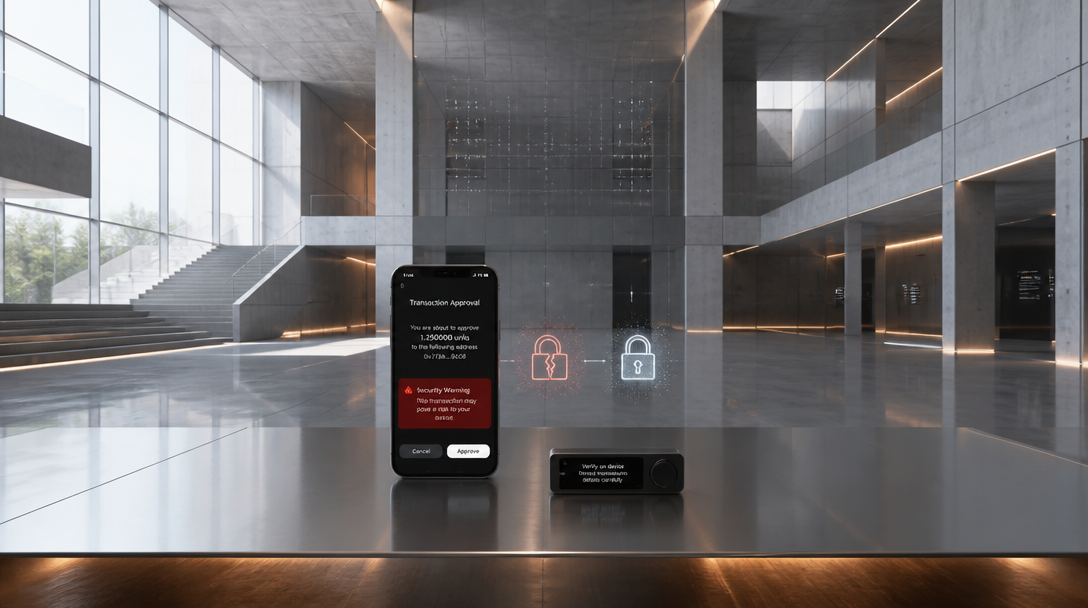
Crypto security analyst ZachXBT recently argued that a dedicated iPhone offers better security than a hardware wallet for signing transactions, a position that has already divided the security community over how best to protect private keys and approve on-chain activity.
The debate centers on a fundamental trade-off. Hardware wallets isolate private keys from internet-connected computers, but their small screens limit the transaction context users see before approving transfers. Attackers have exploited this approval moment by manipulating what appears on device screens, collecting valid signatures for malicious transactions. Bybit lost $1.5 billion through manipulated interface signatures, while Radiant Capital lost $50 million in a similar attack months earlier, both occurring when developers using hardware wallets signed transactions that appeared routine on their screens but were malicious.
ZachXBT’s position centers on Apple’s iPhone as an alternative. A dedicated iPhone offers a hardened operating system, app sandboxing, biometric locks, and a larger display than hardware wallets. These features theoretically allow users to verify more transaction detail before signing. However, the approach carries its own risks: it depends entirely on wallet implementation quality and introduces reliance on Apple’s infrastructure.
A technical mismatch also complicates the iPhone argument. Apple’s Secure Enclave uses NIST P-256 keys, while Bitcoin and Ethereum use the secp256k1 standard, creating a gap in key isolation between the hardware and the cryptographic protocol.
Policy-Based Restrictions Emerge as Alternative
Beyond the hardware-versus-iPhone debate, a third approach has gained attention: policy-enforcing wallets that restrict what valid keys can do. Trail of Bits proposed extending transaction restrictions directly into smart contract wallets, including daily spending limits, allowlisted destinations, and withdrawal delays of up to 24 hours for transfers above a $100,000 cap.
Chainalysis’s Hexagate product runs pre-signing simulations, flagging transactions against company policy before users approve them. This approach suggests that showing people more information solves less than restricting what a valid key can authorize in the first place.
The scale of wallet compromise remains significant. Chainalysis counted 158,000 individual wallet compromises in 2025, affecting 80,000 victims and resulting in $713 million in total losses. In April 2026, a fake Ledger application discovered on the Mac App Store stole $9.5 million from 50 victims, demonstrating that even established wallet manufacturers face supply-chain risks.
Bitcoin security specialist Jameson Lopp recommends dedicated hardware for cold storage to prevent remote attacks, a position that reflects the ongoing tension between isolation and usability in wallet design.
The industry standard ERC-7730 allows protocols to supply machine-readable instructions that translate contract calls into plain language, potentially improving transaction clarity across wallets. However, no single approach has yet resolved the fundamental vulnerability: the gap between what users intend to approve and what they actually authorize on their screens.
Frequently Asked Questions
Why does ZachXBT favor a dedicated iPhone over a hardware wallet?
A dedicated iPhone offers a hardened operating system, app sandboxing, biometric locks, and a larger display than hardware wallets, letting users verify more transaction detail before signing.
What hardware wallet attacks does the article cite?
Bybit lost $1.5 billion through manipulated interface signatures, while Radiant Capital lost $50 million in a similar attack, when developers signed transactions that appeared routine but were malicious.
What technical limitation affects the iPhone approach?
Apple's Secure Enclave uses NIST P-256 keys, while Bitcoin and Ethereum use the secp256k1 standard, creating a gap in key isolation between the hardware and the cryptographic protocol.