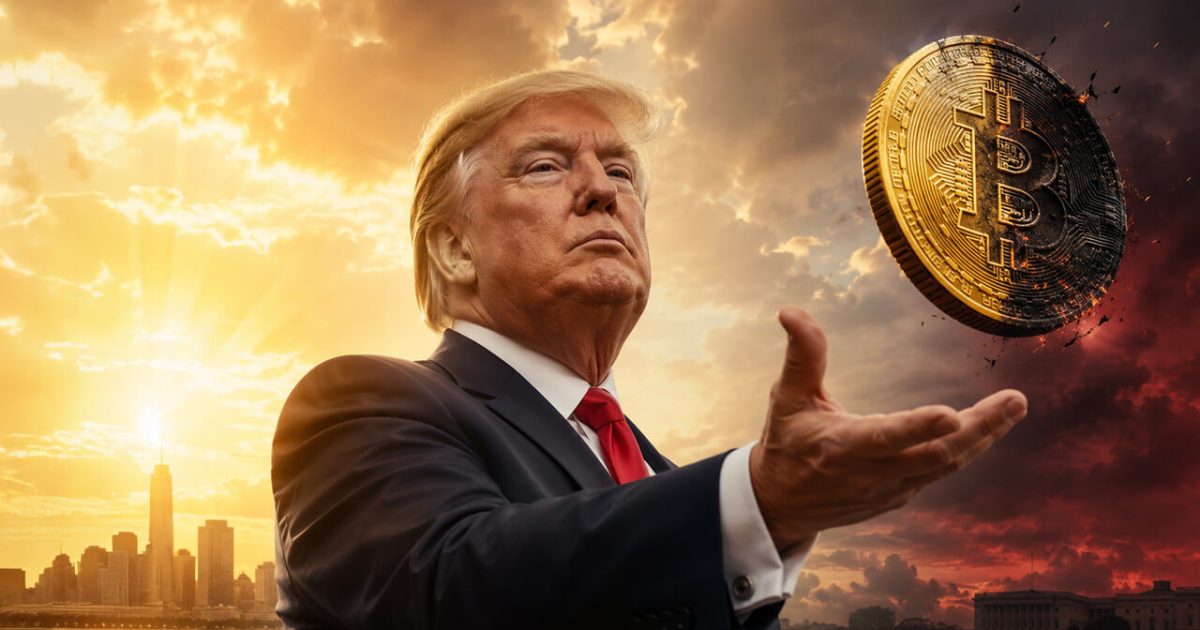
No modern U.S. president has moved Bitcoin closer to formal government recognition than Trump. Since his inauguration on January 20, 2025, Trump signed two executive orders and supported federal legislation that fundamentally repositioned Bitcoin within the American regulatory and financial system. Yet nine months into his presidency, Bitcoin adoption remains flat, public trust in crypto has deteriorated, and the asset trades 37% below its October 2025 peak of $126,198. The gap between Trump’s policy achievements and Bitcoin’s real-world progress reveals a more complex picture than headlines suggest.
Policy Recognition Without Precedent
Trump issued Executive Order 14178 explicitly supporting lawful digital-asset use, including public blockchains, self-custody, and mining operations. On March 6, 2025, he signed Executive Order 14233 establishing a Strategic Bitcoin Reserve, marking the first time a sitting U.S. president formally committed to government Bitcoin holdings. Congress then passed the GENIUS Act, creating a federal stablecoin framework, while the SEC, OCC, and Federal Reserve issued clarifying guidance on banking relationships and custody arrangements for crypto firms. These moves represent institutional legitimacy that no previous administration extended to Bitcoin.
Price Momentum Masks Deeper Weakness
Bitcoin gained 20% from election day (November 5, 2024, at $67,800) to May 10, 2026. However, the asset peaked at $126,198 on October 6, 2025, suggesting momentum has reversed sharply. Current pricing at approximately $80,000 reflects a pullback from both the inauguration level ($101,200 on January 20) and the March reserve announcement ($90,600). More troubling: public adoption has stalled. A June 2025 Gallup survey found just 14% of U.S. adults own crypto, while 60% reported no interest. Only 8% use crypto for any purpose, and just 2% use it for payments. Confidence remains weak, with 55% considering crypto very risky and 63% expressing little to no confidence in the asset class (Pew, October 2024).
Institutional Durability Remains Unproven
Trump’s executive orders created a regulatory pathway where none existed. Banking clarifications from the OCC and Federal Reserve withdrawal of previous guidance reduced operational friction for custody and exchange platforms. The CLARITY Act passed the House but has not yet become law, leaving a critical gap in stablecoin regulation. Trump-linked crypto businesses have created reputation problems that underscore a central risk: political recognition can be reversed. The real test is whether Bitcoin has become more institutionally durable, more legally defensible, and more difficult for future governments to marginalize.
What Comes Next
Trump’s Bitcoin legacy rests on whether political recognition became durable institutional protection. The Strategic Bitcoin Reserve acquisition strategy remains unclear. The CLARITY Act’s passage into law would solidify the stablecoin framework. Institutional adoption metrics—holdings by corporations, pension funds, and international central banks—offer the clearest measure of whether Trump’s policy wins translate into structural change. Price alone cannot answer the question.