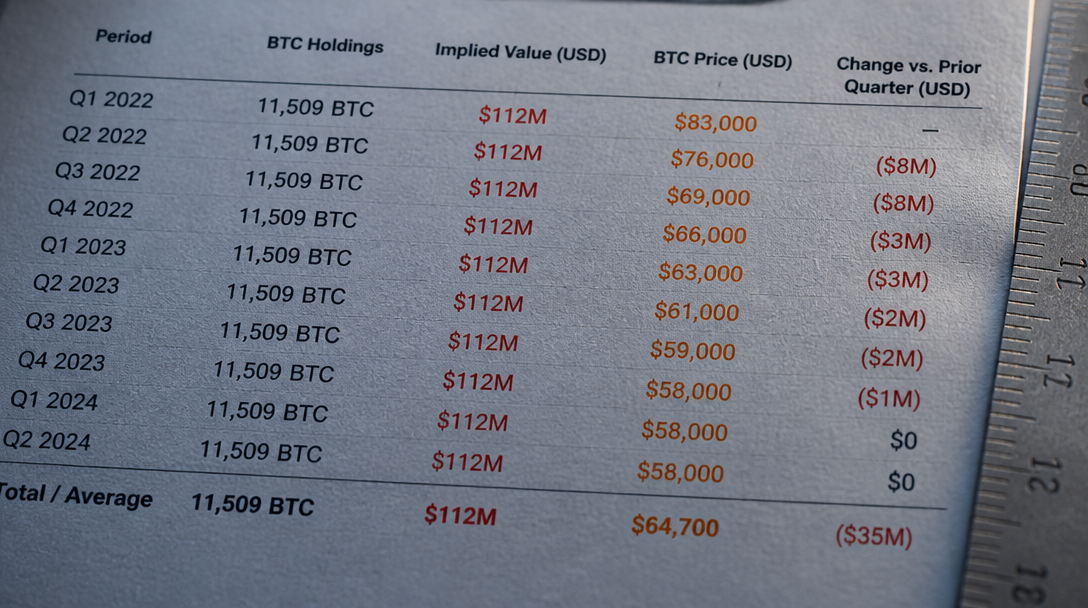
Tesla maintained its bitcoin treasury at 11,509 BTC unchanged through the second quarter ended June 30, 2026, while reporting a $112 million after-tax impairment loss as the digital asset declined 14% during the period.
Bitcoin fell from roughly $83,000 at the start of Q2 to approximately $58,000 by month-end, pressuring the value of Tesla’s holdings. The impairment loss flowed through Tesla’s earnings under current accounting rules that require companies holding digital assets to recognize declines in value.
Tesla has neither bought nor sold bitcoin since 2022, extending a nearly four-year streak of inaction on its digital asset position. The company initially purchased $1.5 billion worth of bitcoin in early 2021 and briefly accepted it as payment for vehicles before suspending the practice over environmental concerns. In 2022, Tesla sold roughly 75% of its holdings.
The bitcoin impairment came as Tesla reported mixed Q2 results overall. Revenue reached $28.2 billion, beating the consensus estimate of $27.6 billion. However, non-GAAP earnings per share of $0.33 fell short of analyst expectations of $0.55. Tesla’s gross margin stood at 16.8%, while GAAP net income totaled $1.11 billion. Free cash flow for the quarter was negative $1.1 billion.
Tesla remains one of the largest publicly traded corporate holders of bitcoin, though smaller than Strategy (MSTR), which holds significantly larger digital asset reserves. At the time of reporting, bitcoin traded near $65,840.
Accounting Impact
Under standard accounting rules, companies holding digital assets must mark unrealized losses to earnings when asset values decline. Tesla’s $112 million after-tax impairment reflects this requirement, separate from any realized gains or losses the company might incur if it were to sell positions. The loss does not indicate any change to Tesla’s treasury strategy or holdings composition.
Unchanged Position
The stability of Tesla’s 11,509 BTC position underscores the company’s passive approach to its digital asset treasury since the 2022 liquidation. With no purchases or sales in nearly four years, Tesla’s bitcoin holdings represent a static allocation that fluctuates only with price movements rather than portfolio adjustments.