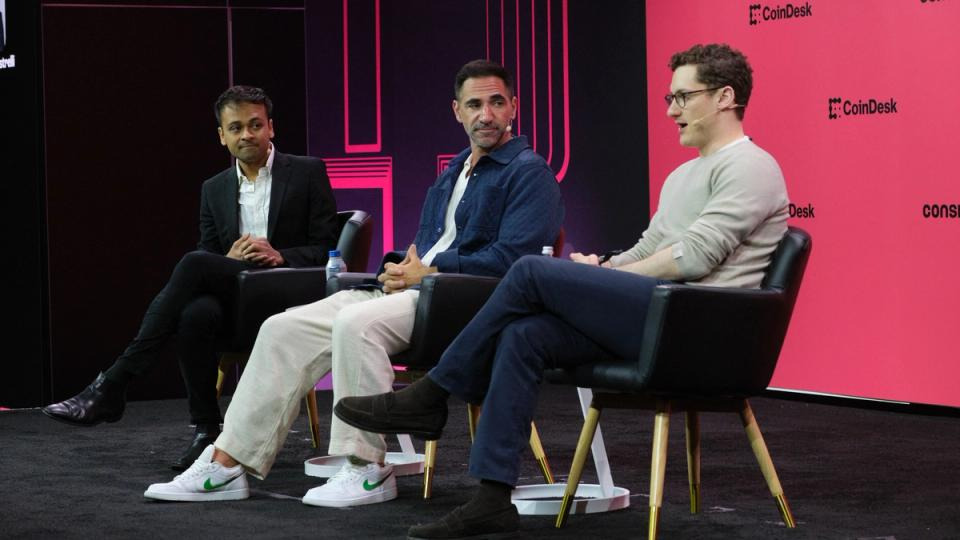
Two crypto-native platforms argued at Consensus Miami that sports betting should be regulated as a federal financial product under the Commodity Futures Trading Commission’s Designated Contract Market framework rather than treated as state-licensed gambling. Novig and 57 Maiden contend that legacy sportsbooks systematically ban winning bettors, a practice they say reveals the industry’s true nature as a financial market, not a consumer protection regime.
The Banning Problem Exposing Regulatory Failure
Jacob Fortinsky, Novig’s co-founder and CEO, framed the issue bluntly: “Sports betting is really the only industry in the country that regularly limits and bans their power users.” Adam Mastrelli, founder of AI-driven prediction market firm 57 Maiden, provided a concrete example. His firm has developed 154 proposed trading strategies for prediction markets, with 3 currently profitable. Within two months of trading, Mastrelli and a partner were banned from two major sportsbooks for being “sharp”—industry parlance for consistently profitable traders. Mastrelli compared the practice to “LeBron James getting kicked out of the NBA for being too good,” highlighting the absurdity of excluding skilled participants from a purportedly consumer-protection-focused regulatory model.
Federal Framework Versus State Revenue Model
Novig currently operates a sweepstakes product across 35 states but plans a transition to the DCM framework in summer 2026 to reach all 50 states. Fortinsky alleged that state regulators prioritize tax revenue over consumer protection or market efficiency. When regulators told Novig’s team they were “naive if you think we care about consumer protection or innovation,” the message was clear: states view sports betting as a revenue stream, not a regulated financial market. The DCM framework, overseen by the CFTC, would classify sports betting contracts as binary financial instruments eligible for federal futures trading rather than state gambling licenses.
Litigation and Regulatory Conflict Escalate
The push for federal classification occurs amid 15 pending lawsuits between the CFTC, prediction market platform Kalshi, trading platform Robinhood, and various states. The regulatory conflict reflects a fundamental disagreement over jurisdiction. Fortinsky predicted a 2-3 year timeline before the Supreme Court resolves the federal-state dispute. The $2 trillion global sports betting asset class remains caught in this legal ambiguity, with platforms forced to navigate fragmented state rules or risk federal enforcement action. Colorado’s attempted state-level regulation adds another layer of complexity to the patchwork approach.
The Financial Instrument Argument Takes Shape
The panelists’ core argument rests on reclassifying sports betting contracts as financial derivatives rather than gambling products. Mastrelli noted that as algorithmic trading edges are discovered and exploited, “this edge will go away,” a dynamic consistent with efficient financial markets, not consumer gambling. If the CFTC’s DCM framework prevails, winning traders would be protected participants rather than targets for exclusion. The outcome will determine whether sports betting operates under consumer protection law or financial market regulation.