Government-backed legislation targets stablecoins and exchange rules
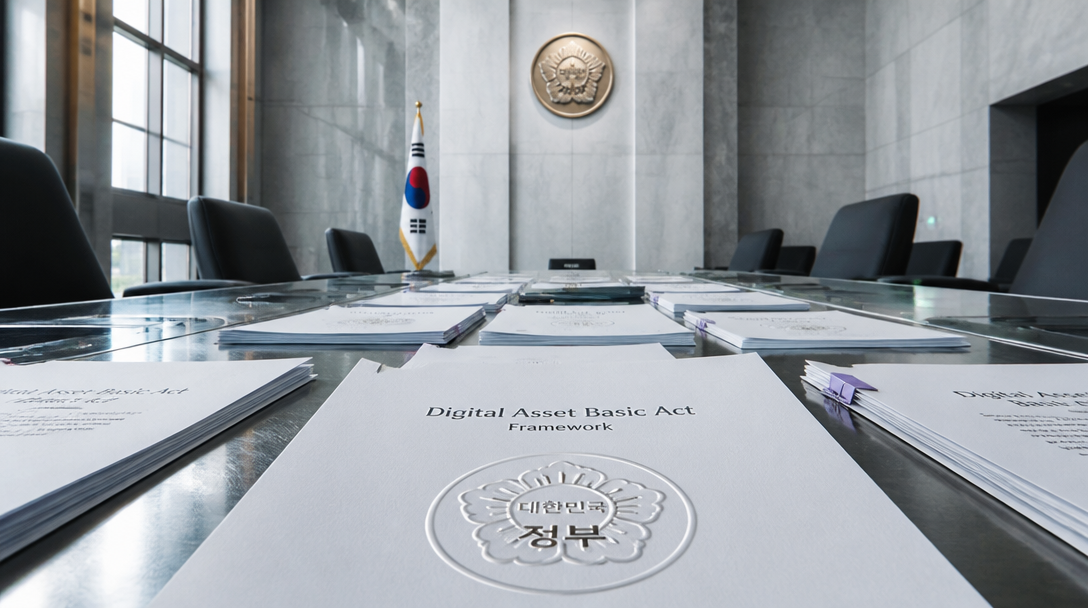
South Korea’s Financial Services Commission is drafting a consolidated Digital Asset Basic Act with the ruling Democratic Party, marking the first government-backed proposal to unify fragmented cryptocurrency regulation after months of legislative gridlock.
The FSC briefed the National Assembly on July 29, 2026, outlining a framework that would cover stablecoin issuance and circulation, digital asset business rules, exchange entry requirements, disclosures, internal controls, and system-resilience standards. The move comes as 10 separate digital asset and stablecoin bills remain pending in Parliament.
Key regulatory disputes persist. Lawmakers remain divided over whether won-denominated stablecoin issuers should be majority bank-owned and whether ownership limits should apply to major crypto exchanges. These disagreements have prevented settlement of core elements in the consolidated proposal.
Opposition tables bill to repeal 22% crypto income tax
On the same day as the FSC briefing, opposition lawmakers scheduled a bill to repeal South Korea’s crypto income tax, which is set to take effect on January 1, 2027. The tax applies to crypto income transfers or lending at a 20% rate, plus a 2% local income tax, for a combined 22% levy on individuals with annual crypto income exceeding 2.5 million won (approximately $1,700).
Song Eon-seok, a People Power Party lawmaker, introduced the original Income Tax Act amendment on March 19. The opposition argues that taxing cryptocurrency while most ordinary stock investors remain exempt is unfair.
A repeal petition backing the opposition stance has garnered 50,000 signatures. The petition is expected to go before a petitions subcommittee, though neither subcommittee has been fully constituted and no review dates have been set.
Government confirms tax implementation despite delays
The Finance Ministry confirmed on May 7 that the crypto income tax would proceed after repeated delays. The government and ruling Democratic Party support implementing the tax as scheduled.
The FSC’s consolidated Digital Asset Basic Act represents an effort to establish unified rules across stablecoin issuance, exchange operations, and system standards. However, the timeline for introducing and finalizing the consolidated bill remains unclear.