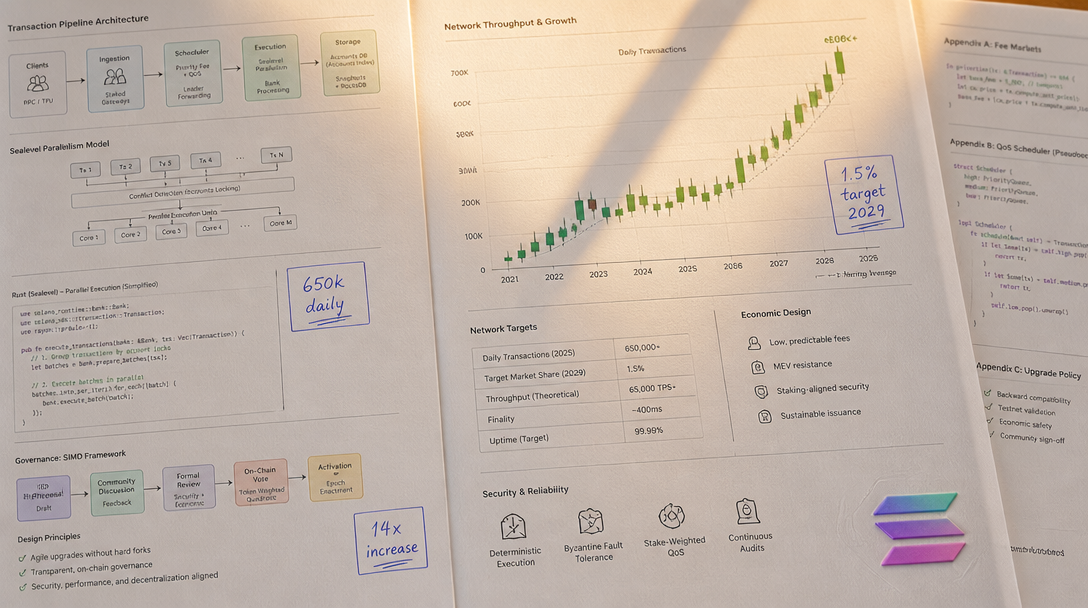
Two linked Solana governance proposals would increase daily SOL burns roughly 14-fold, from approximately $47,000 to $650,000, by introducing resource-based transaction fees and accelerating the network’s path to a 1.5% terminal inflation rate.
SIMD-0553 introduces resource-based fees that charge users according to network resources consumed. SIMD-0550 doubles Solana’s annual disinflation rate to 30%. Together, the proposals would raise daily SOL burns from roughly 650 coins to between 7,500 and 9,000 coins, according to CoinDesk reporting on August 4.
The accelerated burn schedule would push Solana to its 1.5% terminal inflation rate target by 2029, three years earlier than the current trajectory would achieve in 2032. Solana’s inflation rate currently sits near 3.8%, down from 8% under an existing schedule that cuts inflation 15% annually. Even at the top of the projected burn range, 9,000 SOL daily remains modest against roughly 60,000 SOL of daily inflation, meaning the fee change alone does not render SOL deflationary.
Signaling Progress and Threshold
Validators began signaling support this week. As of August 4, the proposals had secured 24.94 million SOL in support across 16 validators, representing 2.3% of the validator set and 5.8% of the 432.65 million SOL currently staked. This translates to 38% progress toward the 15% signaling threshold required before proposals advance to a vote.
Solana Foundation set the 15% gate in July to ensure the validator set would only vote on questions enough stake actually cares about. Reaching the threshold requires an additional 39.95 million SOL, valued at approximately $2.9 billion, by the August 18 signaling deadline.
Helius, a validator and primary backer of the proposals, has contributed 16.03 million SOL to the effort. Blueshift has signaled 3.6 million SOL in support, while Temporal Emerald has committed 1.24 million SOL.
Economic Impact
SIMD-0550 would remove 18.9 million SOL in emissions over six years, equivalent to approximately $1.36 billion in token value. The mechanism works by increasing the pace at which Solana reduces its annual inflation rate from the current schedule.
SIMD stands for Solana Improvement Document, the technical proposal process for protocol changes. SGP refers to Solana Governance Proposal, a newer stake-weighted voting mechanism that sits above the SIMD framework. Proposals must clear the 15% signaling threshold before reaching an actual vote.