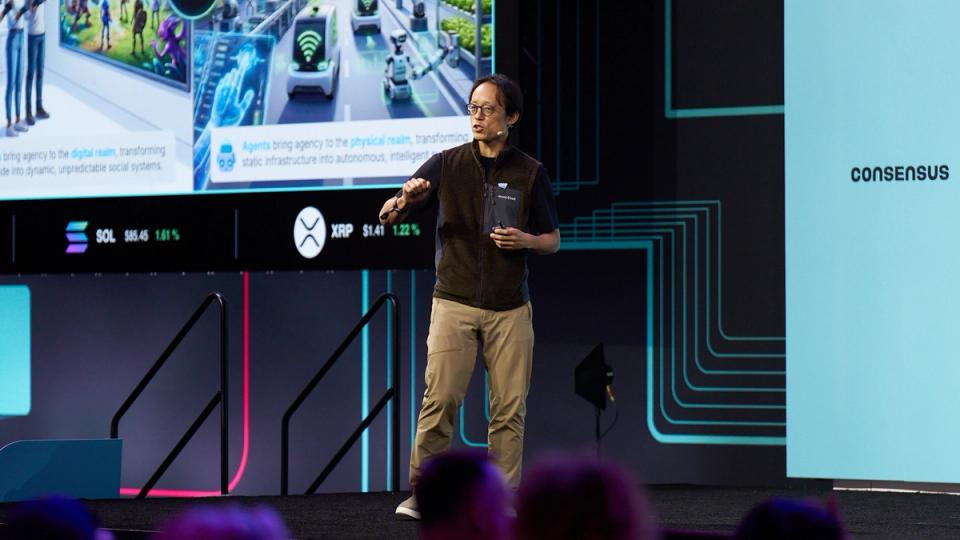
Yat Siu, chairman of Animoca Brands, has fundamentally reframed the metaverse narrative at Consensus 2026 Miami, arguing that blockchain’s killer app is not immersive virtual worlds but autonomous AI agents conducting commerce and payments at scale. Siu predicts 50-100 billion agents will operate on blockchains, vastly outnumbering human users. The shift represents a stark departure from pandemic-era visions of humans inhabiting digital worlds, positioning blockchain instead as infrastructure for machine-to-machine transactions.
The Adoption Problem Metaverse Can’t Solve
Crypto ownership has reached 700-800 million people globally, yet active blockchain application users number only 70 million. That friction exposes a fundamental limitation: blockchain interfaces demand technical sophistication that mainstream users lack. Siu articulated the problem directly: “My mom’s not going to be using MetaMask. It’s hard for her.” Rather than redesign the user experience for humans, his thesis suggests removing humans from the transaction loop entirely. AI agents operating natively on blockchains would bypass wallet management, seed phrases, and gas fees—barriers that have stalled retail adoption since the 2022 crypto lending collapse.
Animoca Brands Backs the Agent Economy Bet
Animoca Brands is formalizing this vision through Animoca Minds, a $10 million investment initiative targeting AI agent developers. The fund signals institutional conviction that the next wave of blockchain utility flows from autonomous systems, not consumer applications. Siu’s central claim cuts deeper than most industry commentary: “Blockchain technology is the ideal financial system for machines. We, the humans, were basically the guinea pigs.” This reframing positions decades of blockchain experimentation as a developmental phase—one that tested payment rails and smart contracts before their true purpose: machine infrastructure.
Repositioning Blockchain as Machine Infrastructure
Siu’s argument challenges the dominant narrative of consumer-facing crypto platforms. Rather than waiting for apps to become intuitive enough for mainstream adoption, this thesis suggests blockchain succeeds by becoming invisible—embedded in backend systems where AI agents handle commerce without user intervention. “The metaverse maybe coming to us rather than being a place that humans go to,” Siu noted. This pivot positions Animoca and similar platforms as infrastructure providers for an agent-driven economy, not entertainment destinations. The implications extend beyond gaming: autonomous agents conducting supply-chain verification, payments, and settlements could fundamentally alter how commerce operates.
Questions Remain on Timeline and Execution
The agent economy thesis lacks technical specifications and implementation timelines. No other major industry figures have endorsed Siu’s framework publicly. Animoca Minds’ selection criteria and deployment strategy remain undisclosed. The prediction of 50-100 billion agents is ambitious but unanchored to concrete milestones. Whether blockchain infrastructure can scale to support that volume—and whether regulatory frameworks will permit autonomous financial transactions at that scale—remains unresolved.