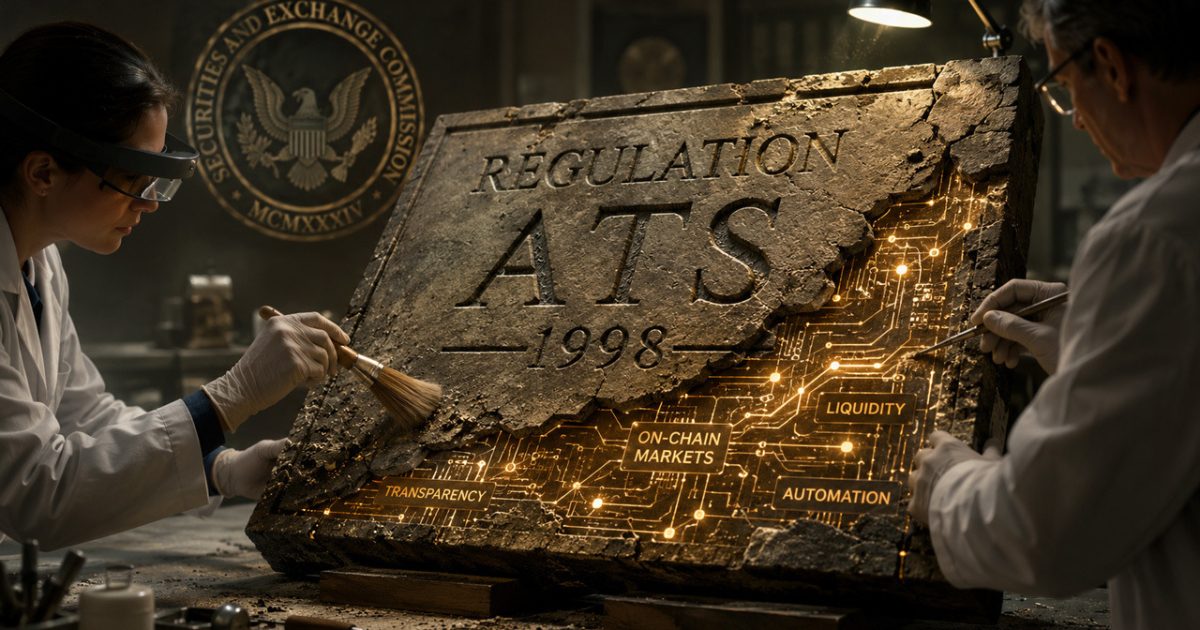
SEC Chair Paul Atkins proposed a limited “innovation pathway” for on-chain trading systems on May 8, 2026, modeled after the agency’s 1990s approach to electronic markets. The framework would allow conditional operation before permanent rulemaking, addressing regulatory uncertainty that has pushed crypto trading activity offshore. The proposal mirrors the SEC’s 1998 adoption of Regulation ATS, which used ad hoc relief and no-action letters to guide emerging trading venues before formal rules took effect.
How the 1990s Framework Applies to On-Chain Systems
On-chain protocols collapse traditional SEC-regulated functions—exchange, broker-dealer, clearing, and transfer agent—into single automated systems. This structural difference creates legal uncertainty under rules designed for separate intermediaries. Atkins’ innovation pathway borrows from the SEC’s 1990s playbook: conditional near-term relief via exemptive orders or no-action letters, followed by formal rulemaking. The CLARITY Act legislative stalemate made SEC action necessary. Without congressional movement on crypto-specific rules, Atkins framed regulatory action as essential to answer operational questions and prevent further offshore migration.
Conditional Relief and Practical Constraints
On April 13, 2026, the SEC’s Division of Trading and Markets issued conditional relief for self-custodial crypto interfaces, calling it an “interim step.” The relief came weeks after an SEC FAQ in February clarified pairs trading and ATS form requirements. Between March 17 and May 4, 2026, the SEC recorded five market structure and tokenization actions. However, the innovation pathway carries sharp operational limits: conditional relief excludes systems that hold customer assets, take orders, route trades, execute transactions, or solicit business. These restrictions raise questions about which on-chain venues actually qualify.
Optimism Meets Skepticism on Real-World Impact
The optimistic reading suggests Atkins intends a genuine compliance bridge for on-chain venues with tailored disclosure frameworks. Pessimistic interpretations warn the pathway benefits only intermediated or hybrid actors while excluding autonomous protocols and decentralized systems due to exclusion criteria. The FTX collapse remains a regulatory reference point for why customer asset custody and operational clarity matter. Treasury Secretary Scott Bessent and SEC Commissioner Hester Peirce have both engaged the design questions, signaling executive interest.
Implementation Remains Undefined
Atkins did not specify the pathway’s form—whether exemptive relief, no-action letters, a pilot program, or a registration-lite model. No implementation timeline was announced. Critically, the CLARITY Act’s stablecoin provision reached a deal on May 1, but the broader legislation’s status remains unclear. Until the SEC defines which on-chain systems qualify and how they apply, the innovation pathway exists more as strategic direction than operational framework.