Stablecoin access tightens as regulators target unauthorized remittance flows
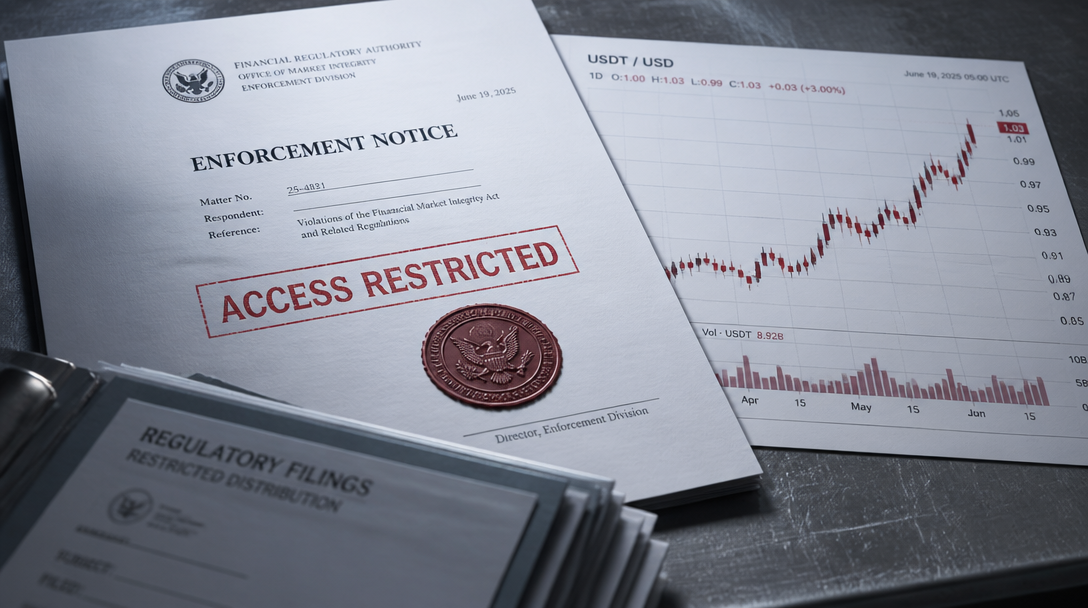
India’s USDT stablecoin traded at an 8.5% premium to the rupee-dollar reference rate on June 29, with local quotes reaching INR 102.88 against a USD/INR reference rate of INR 94.65. The spike marks a sharp departure from the typical 3% to 4% premium range and reflects deepening supply constraints tied to regulatory enforcement.
The premium widened following June 17 enforcement action by India’s Enforcement Directorate, which announced searches at five crypto and fintech platforms: Transak, Carret, Xpat/Remit2any, Onramp.money, and Onmeta. The ED alleged the platforms facilitated USDT-based outward remittances without Reserve Bank of India authorization, with customers depositing rupees into domestic bank accounts, receiving equivalent crypto transfers to overseas wallets, and foreign beneficiaries receiving fiat or crypto equivalents. The ED cited alleged FEMA contraventions totaling INR 2,500 crore and restrained INR 6 crore.
According to Liam ‘Akiba’ Wright, Editor-in-Chief of CryptoSlate, “India’s USDT premium has become a simple number with a larger warning: stablecoin demand can push through policy friction, but it does so at a cost.”
The premium reflects multiple frictions in local dollar-linked crypto access. Banking caution, reduced peer-to-peer supply, tax compliance costs, and market-maker hesitation to intermediate flows that could invite scrutiny have all tightened conditions. USDT maintained its global $1 peg while rupee access inside India became expensive, creating a bifurcated market.
India’s regulatory framework remains incomplete. A Rajya Sabha answer confirmed that virtual digital assets and crypto assets sit outside a settled comprehensive framework, though tighter reporting and tax obligations took effect on April 1. As of March 9, 2026, only 54 VDA service providers were registered with the Financial Intelligence Unit, while authorities directed takedown of 53 apps or URLs.
RBI Deputy Governor T. Rabi Sankar flagged broader concerns in a Bank for International Settlements speech, warning that crypto assets and stablecoins raise risks around dollarization, currency substitution, weakened capital-flow controls, and unmonitored cross-border flows.
The Parliamentary Standing Committee on Finance is scheduled to meet RBI officials on July 2 to discuss virtual digital assets, following a May 20 committee notice initiating a study on the topic. The outcome may clarify whether India will move toward a comprehensive regulatory framework or maintain enforcement-led constraints on stablecoin access.
TRM Labs’ Q1 2026 Global Crypto Adoption Index identified India as a major retail crypto market, with activity sustained through peer-to-peer and domestic exchange channels. The June 17 enforcement action and resulting USDT premium suggest those channels are now under pressure, with users facing both higher costs and regulatory uncertainty around cross-border flows.