Asset Manager Decouples Long-Term Adoption From Near-Term Volatility
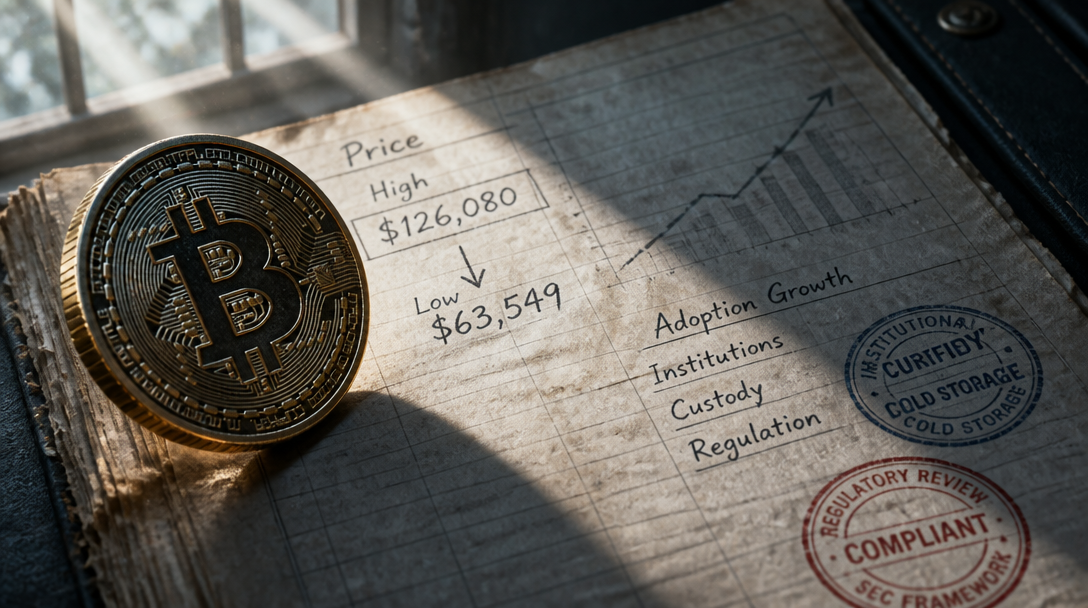
Bitcoin’s price has fallen close to 50% from its October record of $126,080, trading near $63,549 as of August 12. But asset manager Grayscale argues the cryptocurrency’s adoption trajectory remains intact regardless of near-term price swings.
Zach Pandl, head of research at Grayscale, outlined three structural drivers underpinning continued Bitcoin adoption. The first centers on unsustainable government debt growth, which keeps inflation and currency-debasement risk elevated. The second involves stablecoin and tokenization adoption making blockchain infrastructure commonplace in financial services. The third reflects younger investors’ higher appetite for digital assets, with alternative investments becoming standard portfolio components.
“As the spread of the technology continues, many more intermediaries will have the necessary infrastructure (and regulatory clarity) to transact and store balances in Bitcoin — it will no longer be structurally apart from the rest of the financial system,” Pandl said.
Top banks and asset managers have adopted tokenization and crypto technology over the past year, according to Grayscale’s analysis. The firm expects institutions, wealth platforms, and individual investors to continue adding Bitcoin to diversified portfolios largely through exchange-traded products.
Grayscale’s framing separates price cycles from adoption mechanics. A 50% drawdown from peak creates pressure on near-term holders but does not alter the structural case for institutional integration, the firm contends. The analysis, reported by Bitcoin Magazine’s Mathew Di Salvo on August 12, treats adoption as a function of infrastructure maturity and regulatory clarity rather than price momentum.
The tokenization thesis hinges on financial intermediaries gaining the technical and legal footing to custody and transact Bitcoin without treating it as an isolated asset class. Grayscale suggests this shift is already underway among major institutions.