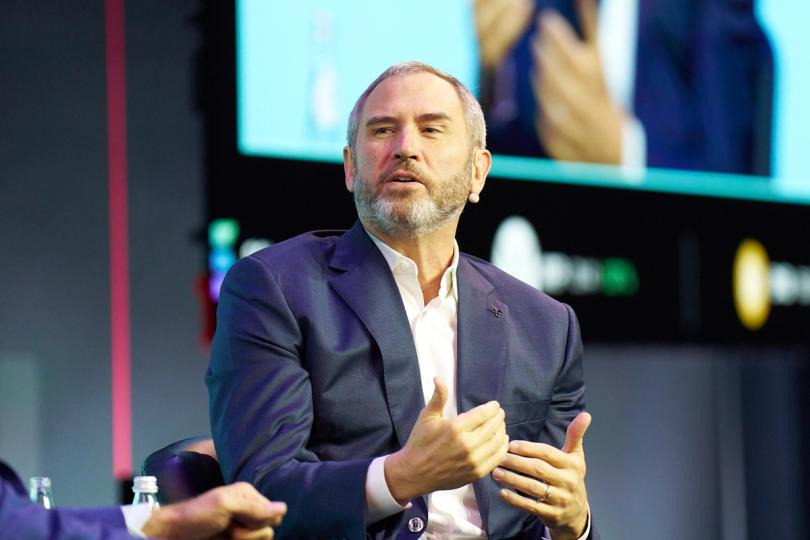
Ripple CEO Brad Garlinghouse warned that the Digital Asset Market Clarity Act requires a Senate Banking Committee hearing within two weeks to remain viable, signaling a narrow legislative window closing on federal crypto regulation. Speaking at Consensus Miami on May 5, Garlinghouse emphasized that without immediate committee action, passage odds would collapse despite recent stablecoin yield compromise language circulating among lawmakers.
Banking Sector Rejects Compromise, Tightens Pressure
A coalition of banking lobbyists rejected the stablecoin yield compromise late last week, undercutting what crypto industry participants had accepted as a workable framework. The compromise addressed banking sector concerns that crypto reward programs resembled interest-bearing deposits, a regulatory gray area that stalled negotiations for months. Garlinghouse acknowledged the tradeoffs: “Do I think it’s perfect? Hell, no. There’s tradeoffs and compromises, but I do think clarity is better than chaos.” The banking coalition’s rejection signals that industry concessions may prove insufficient without direct legislative momentum.
Regulatory Permanence Trumps Personality-Driven Policy
Garlinghouse’s core argument centers on codifying crypto rules beyond individual SEC leadership. Current SEC Chair Paul Atkins has signaled openness to stablecoin frameworks, but his tenure remains finite. “There will be another Paul Atkins after Paul who we don’t know which side of this argument they’re going to fall on,” Garlinghouse stated. The Clarity Act would lock regulatory standards into law, preventing reversals if future administrations appoint commissioners hostile to digital assets. This institutional permanence explains why Garlinghouse frames the two-week window as existential.
Stablecoin Market Expansion Hinges on Legal Clarity
Stablecoins currently represent a $320 billion market. Garlinghouse projects this reaching $3 trillion by 2031 if regulatory clarity emerges. Ripple itself launched RLUSD in 2024 to capture this expansion. Without the Clarity Act, issuers face persistent legal uncertainty around yield mechanisms, custody requirements, and reserve standards. “If it doesn’t happen then, I think the likelihood is going to drop precipitously,” Garlinghouse warned, framing the Senate hearing as the inflection point determining whether the sector scales or stalls.
Next Steps: Hearing Deadline Looms
No Senate Banking Committee hearing has been scheduled as of May 5. The two-week window extends into mid-May, creating a compressed timeline for scheduling, testimony preparation, and committee markup. Banking coalition opposition adds procedural friction. If the committee fails to convene within this window, momentum for the Clarity Act likely dissipates, leaving the $320 billion stablecoin sector dependent on case-by-case SEC guidance rather than statutory protection.