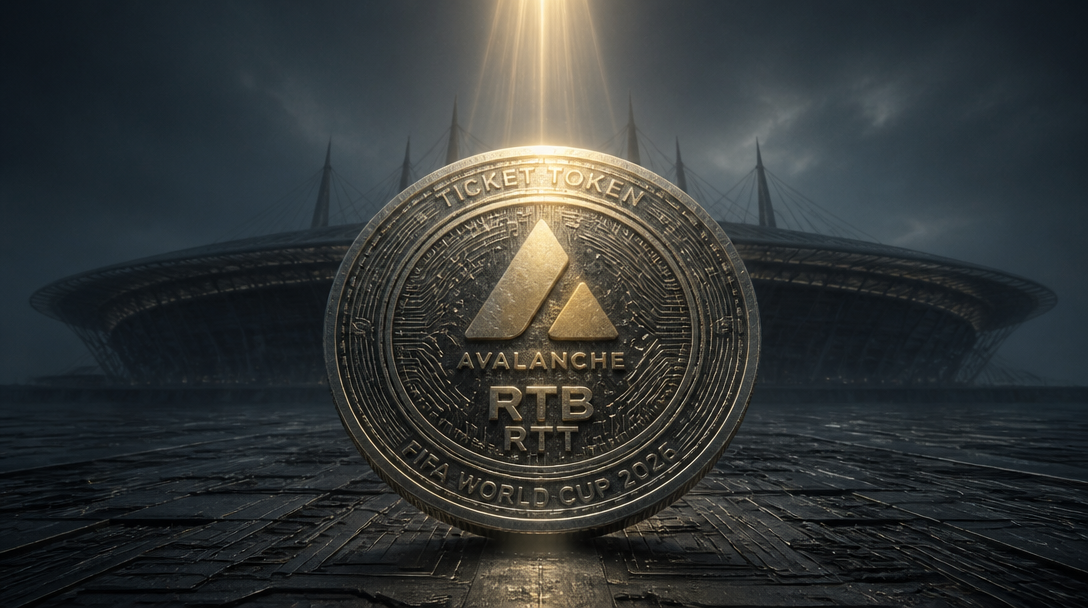
As the 2026 FIFA World Cup unfolds across North America, one of blockchain’s biggest real-world tests is happening largely behind the scenes. FIFA is issuing tradable digital entitlements on the Avalanche blockchain to control ticket resale, reduce bot purchases, and combat fraud across the tournament.
The system centers on two digital assets: Right-to-Buy (RTB) tokens that give fans priority access to purchase specific tickets before public availability, and Right-to-Ticket (RTT) tokens created when an RTB is redeemed. Fans can trade RTBs on secondary markets, but the actual match tickets remain issued through FIFA’s existing ticketing infrastructure.
To date, FIFA has issued 100,000 RTBs. The Club World Cup distributed 50,000 tickets in bundles paired with RTBs. Secondary-market volume for RTTs has reached $15 million, while combined RTB and RTT volume has exceeded $25 million.
The infrastructure runs on a customizable Avalanche Layer-1 blockchain designated the FIFA blockchain. Ava Labs, the main developer firm supporting Avalanche, partnered with Modex on operations. Dominic Carbonaro, who leads the consumer enterprise vertical at Ava Labs, explained the bot problem the system addresses.
“It’s a little bit of the Taylor Swift problem,” Carbonaro said. “Concert gets announced, huge influx of buying comes in, primarily from bots. They buy all the tickets, and then the secondary market sales happen.”
The blockchain-based model fundamentally reshapes where ticket resale occurs. Historically, platforms like StubHub, SeatGeek, Ticketmaster, and Vivid Seats control secondary markets and the attendee data that flows through them. FIFA gains visibility into fan relationships and purchase behavior previously locked within third-party marketplaces.
“The actual administrator of those tickets, FIFA, has no idea who the people are buying,” Carbonaro noted. “That data sits with SeatGeek, StubHub, Ticketmaster, Vivid Seats.”
By moving resale activity into a FIFA-controlled environment, the organization recaptures data and reduces fraud vectors. Carbonaro emphasized the verification layer: “The tickets are now 100% verifiable onchain, so it reduces all types of fraud, fake secondary sales, etc.”
The implementation prioritizes user experience over blockchain visibility. Carbonaro stressed that the blockchain layer should remain invisible to fans. “We want to deliver Web2 experiences with blockchain underneath,” he said. “The user should not even know they’re using blockchain.”
This approach distinguishes FIFA’s use case from speculative crypto applications. The system ties blockchain directly to a real-world product, ticketing infrastructure, and measurable fraud reduction rather than price appreciation or financial returns.
The deployment represents a test of blockchain’s utility in mass-market consumer applications. Whether the model persists beyond the 2026 World Cup or expands to other FIFA events remains unspecified.