UK regulator establishes capital buffers, stablecoin rules, and market-abuse controls
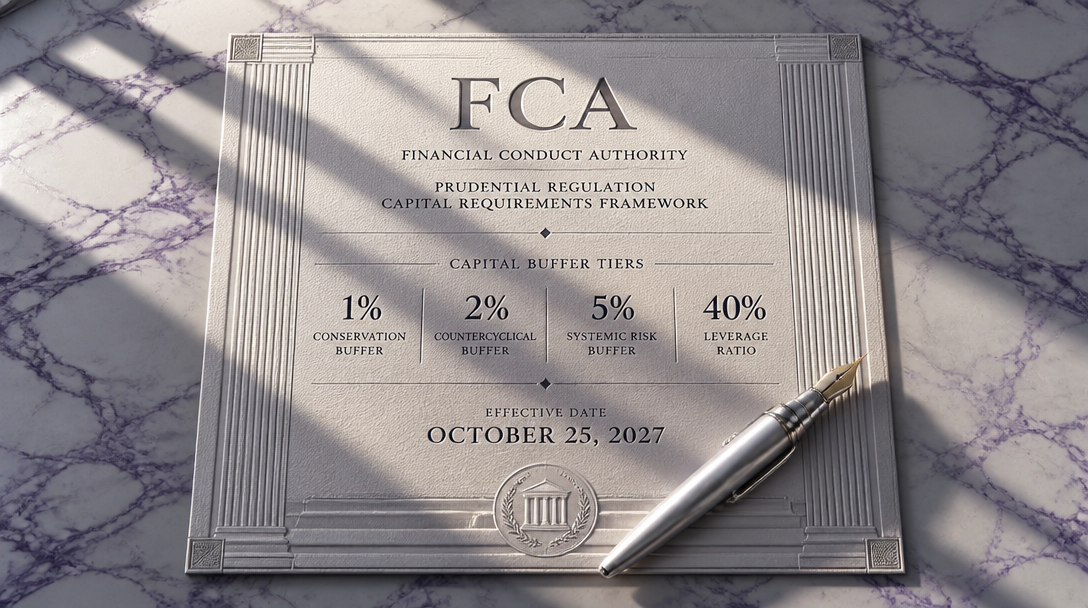
The UK Financial Conduct Authority published a comprehensive regulatory framework for cryptoassets on June 30, 2026, setting capital requirements, market-abuse controls, and stablecoin standards ahead of a mandatory authorization regime taking effect October 25, 2027.
The framework applies to crypto trading platforms, custodians, stablecoin issuers, lending and borrowing providers, staking firms, and certain decentralized finance firms with identifiable controlling entities. All regulated crypto firms must maintain minimum capital buffers and conduct annual stress tests. Unlike banks, which receive specific stress-test scenarios from the Bank of England, crypto companies will design their own stress tests based on internal risk models.
David Geale, Executive Director of Payments and Digital Finance at the FCA, said: “We’ve created a framework that doesn’t force firms to choose between regulatory certainty and room to innovate. For consumers, it means firms will be held to similar standards to other financial providers, though we can’t regulate away risk.”
The framework introduces market-abuse rules covering insider trading and market manipulation. Large trading platform operators will follow industry-led monitoring; the mandatory on-chain surveillance scope was narrowed from an earlier draft.
Stablecoin issuers face a 1% capital coefficient, down from an initially proposed 2%, to maintain UK competitiveness with the European Union’s MiCA regulation and emerging US stablecoin legislation. Stablecoin backing asset pools may hold a maximum 5% cash surplus. Eligible cryptoassets on UK qualifying trading platforms must maintain a 40% net risk position requirement, and a 40% counterparty default volatility adjustment applies to eligible cryptoassets.
The authorization timeline begins in July 2026 with FCA pre-application support meetings. The application window opens September 30, 2026 and closes February 28, 2027. Existing anti-money laundering registrations will not convert to authorization; firms must submit fresh applications.
The framework stems from legislation passed in February 2026 that brought cryptoassets within the FCA’s regulatory remit. Until October 25, 2027, FCA oversight remains limited to financial promotions and anti-money laundering controls. From that date forward, all regulated crypto firms operating in the UK must hold FCA authorization.