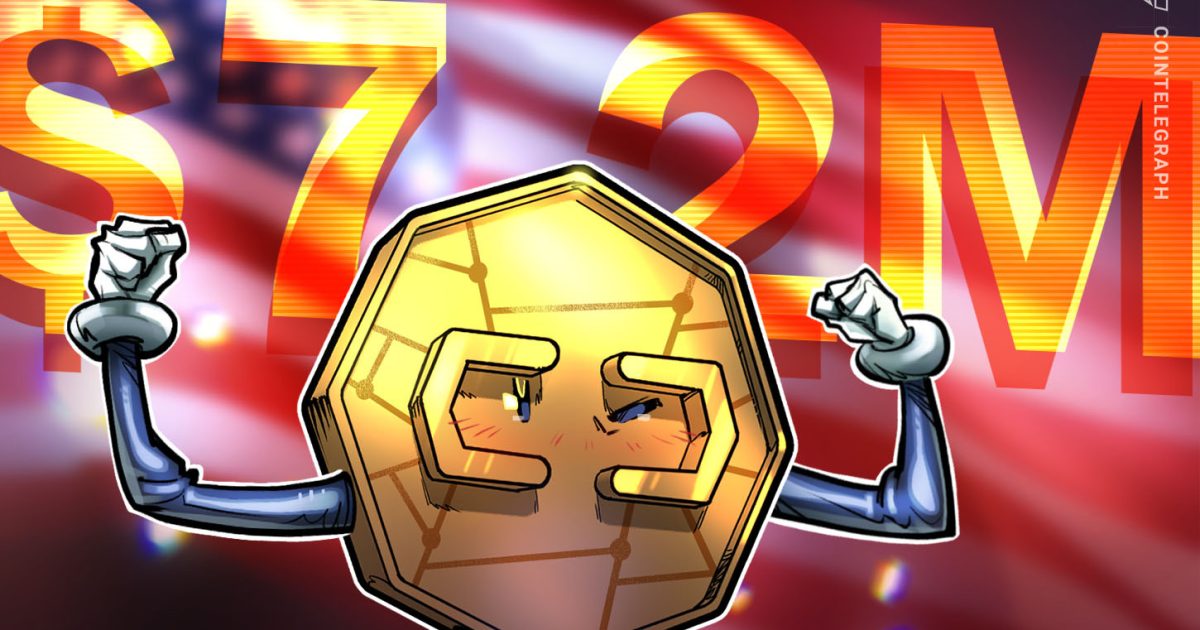
Crypto-backed political action committees affiliated with Fairshake have spent $7.2 million supporting pro-crypto candidates across five US states as the industry mobilizes for the 2026 midterm elections. The spending, reported in Federal Election Commission filings this week, targets Democratic and Republican nominees in Georgia, Texas, Kentucky, Indiana, Nebraska, and Alabama ahead of May primaries, marking a sustained effort to expand crypto-friendly representation in Congress.
Fairshake’s Dual-Affiliate Strategy Takes Shape
Fairshake operates through two distinct PACs to support candidates across party lines. Protect Progress PAC, backing Democratic candidates, has committed $1.6 million combined to Jasmine Clark in Georgia’s 13th Congressional District primary and Christian Menefee in Texas’s 18th District runoff. The PAC pledged an additional $1.5 million to oppose incumbent US House Representative Al Green, describing him as “actively hostile towards a growing Texas crypto community.” Defend American Jobs PAC, supporting Republican candidates, has deployed $5.6 million across multiple races, including $3.5 million in media support for Kentucky Senate candidate Andy Barr and $514,000 backing James Baird in Indiana. This bifurcated approach reflects the industry’s determination to influence both parties regardless of traditional political alignment.
2026 Spending Signals Escalation From 2024
The $7.2 million deployed so far in 2026 follows Fairshake’s $130 million spending blitz during the 2024 election cycle. As of January 2026, Fairshake held $193 million in reserves, positioning the PAC for significantly higher total expenditures across the full election cycle. The timing coincides with critical legislative moments: last week, the US Senate announced a stablecoin yield compromise, while the Senate Banking Committee has not yet scheduled markup for the CLARITY Act, a digital asset market structure bill that represents a top priority for crypto advocates. Andy Barr, the Kentucky candidate receiving substantial Fairshake support, has publicly backed both the GENIUS Act and CLARITY Act, aligning closely with industry legislative goals.
Crypto Industry Signals Election-Year Focus on Policy Alignment
Cody Carbone, CEO of The Digital Chamber, stated that crypto policy positions have become central to electoral campaigns. “I do think it is critically important that every single member of Congress have a position on crypto, it’s part of their election campaign and their platform, and voters are going to be paying attention to this,” Carbone said. The spending reflects a strategic shift: rather than concentrating resources on a single party or region, Fairshake is distributing capital to maximize pro-crypto representation across geographic and partisan lines. This approach suggests the industry views cryptocurrency regulation as a non-partisan priority heading into 2026.
Primary Elections Will Test Crypto’s Electoral Influence
Jasmine Clark’s May 19 Georgia Democratic primary and Christian Menefee’s May 26 Texas runoff will provide early indicators of Fairshake’s electoral effectiveness in 2026. The $1.5 million anti-Al Green campaign represents one of the largest direct opposition efforts in either race. With six months until Congressional elections and $193 million in reserves, Fairshake’s total 2026 spending budget remains undisclosed. The outcome of these May contests will likely signal whether the crypto industry can replicate or exceed its 2024 political impact during a non-presidential election cycle.