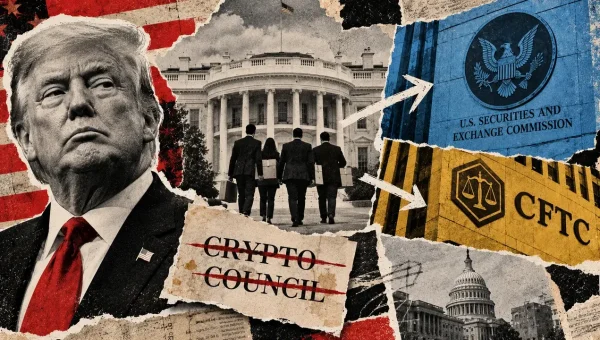
Crypto industry leaders expect the Securities and Exchange Commission, Commodity Futures Trading Commission, and Treasury to drive US digital-asset regulation regardless of midterm election outcomes, sidelining hopes for legislative action.
Maylea Ma, deputy general counsel at 1inch, said “real movement” in US digital-asset regulation over the next few years will come from federal agencies rather than Congress. The CLARITY Act remains stalled in the legislative chamber, leaving agency guidance as the primary policy vehicle.
The SEC proposed a framework for crypto fundraising in August 2026, followed by updated staff guidance in September on token buybacks, crypto networks, and staking receipt tokens. The CFTC submitted its own crypto market regulatory plan to the White House on September 17, two days after the Senate failed to advance the CLARITY Act.
Michael Ho, co-founder of D3, highlighted the fragility of agency-driven policy. “With the market structure bill stalled, US crypto policy continues to rest on agency guidance that a future administration can reverse, and that keeps serious capital waiting,” Ho said.
Ma acknowledged the long-term challenge. “The long-term goal, of course, remains a statute that cannot be reversed every time a government changes,” she said. Ho echoed that concern, stating “Whatever the result, clear rules written into law are what will bring institutional capital into tokenized real-world assets.”
Agency guidance lacks the permanence of statutory law. Regulatory frameworks issued by executive bodies can be modified or rescinded by incoming administrations, creating uncertainty that deters institutional investment in crypto and tokenized assets.