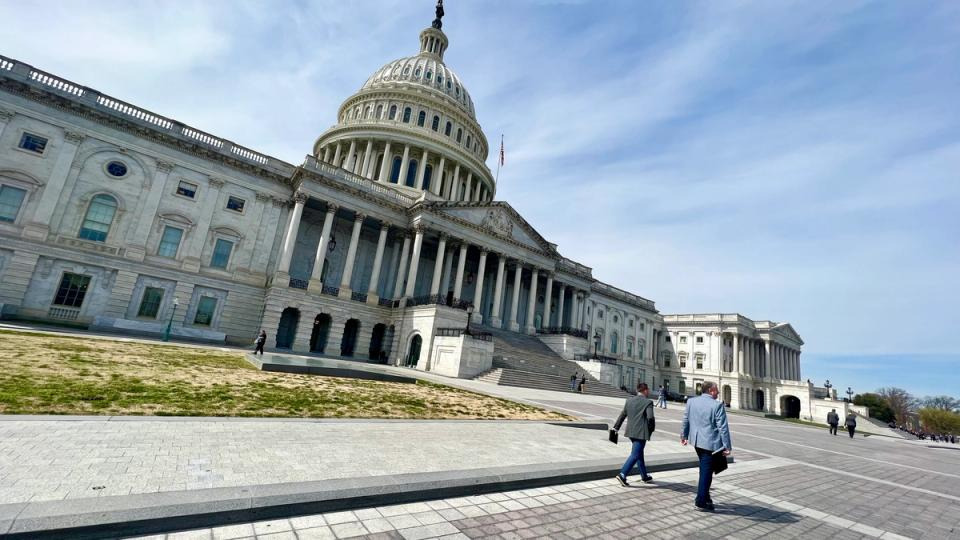
The U.S. Senate Banking Committee faces a critical decision on digital asset regulation. Nine months after Congress passed the GENIUS Act for stablecoins—which sparked a 49% market expansion to $306 billion by year-end 2025—lawmakers must now advance the CLARITY Act to establish comprehensive market structure rules for the broader crypto ecosystem. The window to act is narrow, according to authors Summer Mersinger and Ji Hun Kim, who argue that regulatory clarity will determine whether crypto development remains anchored in the United States or continues migrating offshore.
The GENIUS Act Proof of Concept
The GENIUS Act’s passage demonstrated a direct link between regulatory clarity and market growth. Stablecoin issuers like Circle and cryptocurrency firms like Ripple saw institutional capital flow back to U.S.-regulated platforms. The framework established clear jurisdictional boundaries between the SEC and CFTC, created disclosure standards, and defined the OCC’s supervisory role. Within nine months, the stablecoin market expanded 49%, reaching $306 billion. This growth reversed a decade-long trend: U.S. crypto developer employment dropped 51% over the past ten years, with protocol foundations relocating to jurisdictions like the Caymans when regulatory clarity was absent. The GENIUS Act proved the inverse: “Clear rules produced exactly what their advocates said they would: investment, institutional engagement and onshoring of activity,” Mersinger and Kim write.
Global Competition Accelerates Timeline
The EU, Singapore, and the UAE have already enacted digital asset market structure regimes. Meanwhile, 90% of centralized exchange volume operates offshore, and 90% of senior crypto leadership recruitment searches target U.S.-based talent—a signal that institutional players still view American regulation as the gold standard. Yet without CLARITY Act passage, this advantage erodes. The $3.2 trillion crypto market spans 70 million American owners (20% of the population), creating both political urgency and regulatory exposure. The CLARITY Act passed the House with 294 votes, establishing bipartisan momentum. Senate Banking Committee Chairman Scott and bipartisan negotiators Senators Tillis and Alsobrooks have spent two years building toward this moment. A markup is expected in the near term, with target passage before year-end 2025.
What CLARITY Addresses
The CLARITY Act tackles market structure gaps the GENIUS Act left untouched: trading venue registration, intermediary conduct standards, token lifecycle compliance, and non-custodial technology protections. It clarifies SEC and CFTC jurisdictional boundaries across a broader asset class. The digital asset industry made significant concessions during negotiations, particularly on stablecoin yield provisions, signaling willingness to compromise. Mersinger and Kim frame this as necessary: “nothing is perfect in this process.” The legislation balances innovation with investor protection—a balance competing jurisdictions claim to offer but that only U.S. institutional infrastructure can reliably enforce.
The Strategic Window
Regulatory arbitrage is accelerating. Without CLARITY Act passage before year-end, momentum may stall into 2026. The GENIUS Act’s success provides the Senate Banking Committee with concrete evidence that comprehensive digital asset legislation attracts capital and talent. As the authors note: “America has long led the world because it has embraced innovation, markets and the rule of law.” The CLARITY Act is the test of whether that principle still holds in crypto.