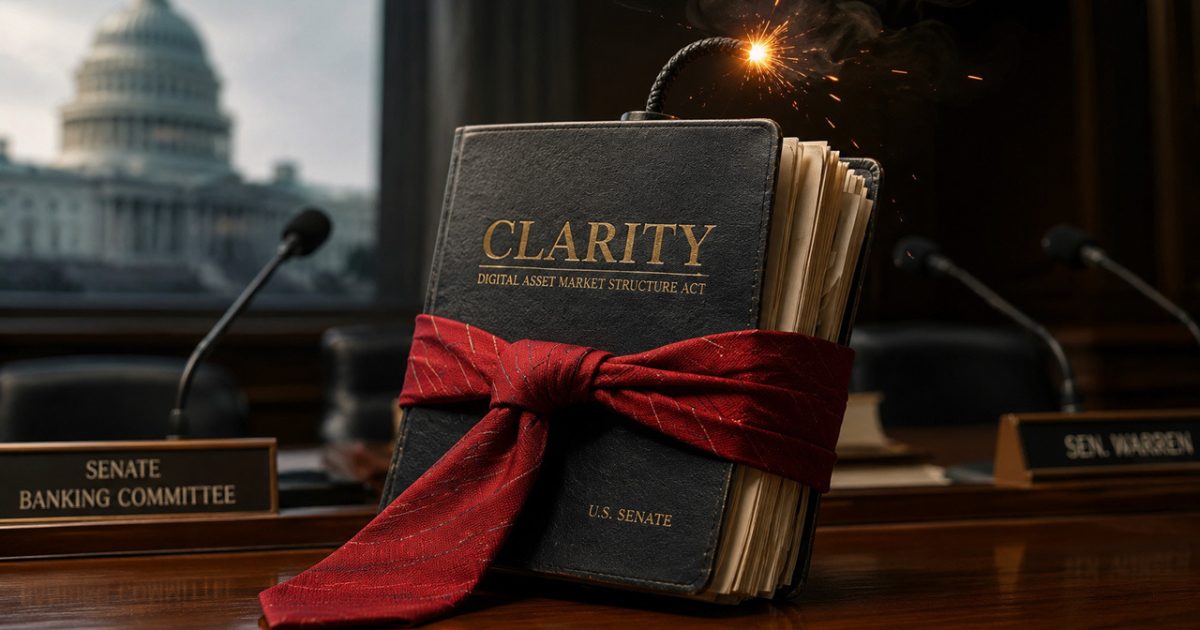
The Senate Banking Committee’s scheduled markup of the CLARITY Act faces potential collapse next week as Democrats demand ethics language addressing Trump family crypto interests, while Republicans reject the provisions as outside committee jurisdiction. The bill, designed to clarify regulatory boundaries between the SEC and CFTC for digital assets, has already survived months of disputes over stablecoin rewards and developer protections. Now a conflict-of-interest row threatens to derail what polls show is broadly popular legislation.
Ethics Demands Threaten Crypto Clarity
Democrats, led by negotiations including Sen. Ruben Gallego (D-AZ) and Sen. Elizabeth Warren (D), are pushing to embed ethics restrictions into the CLARITY Act that would address what they describe as Trump family profiteering from crypto ventures. A Democratic report alleged the Trump administration dissolved the National Cryptocurrency Enforcement Team and intervened to halt investigations into major firms including Coinbase, Gemini, Robinhood, Ripple, Crypto.com, Uniswap, and Kraken. The report cited $11.6 billion in Trump family crypto holdings and estimated $800 million in income from digital asset sales during the first half of 2025. Republicans argue ethics language falls outside Banking Committee scope and should be addressed separately, blocking committee agreement needed for markup to proceed.
Stablecoin Compromise Holds, but Risks Unravel
The Tillis-Alsobrooks compromise released May 4 addresses the stablecoin rewards dispute by barring crypto firms from offering yields that function as bank deposits while permitting incentives tied to customer activity or usage. Sen. Thom Tillis (R) defended the language as reflecting “months of negotiation” and directly addressing risks that deposit-like rewards could weaken bank lending. The American Bankers Association, however, still argues the compromise permits deposit-like rewards under different framing. Coinbase CEO Brian Armstrong previously withdrew support over regulatory concerns but signaled renewed interest after the compromise circulated May 7, suggesting momentum could recover if the ethics standoff resolves.
Voter Mandate Undercuts Partisan Gridlock
A HarrisX poll conducted May 1-4 surveyed 2,008 voters and found 52% support the CLARITY Act versus 11% opposition. Seventy percent of voters said the U.S. should have passed crypto legislation already, while 60% prefer federal legislation over case-by-case regulatory enforcement. Galaxy Digital research director Alex Thorn noted the poll showed cross-party appetite: “Democrats, Republicans and independents, people across the spectrum want Congress to pass CLARITY and they want them to pass it now.” The polling data contradicts the partisan gridlock now freezing markup, suggesting both parties face political risk if they delay further.
Next Week Determines Crypto Regulation Timeline
The committee markup scheduled for the week of May 8 will signal whether Democrats and Republicans can navigate the ethics conflict without fracturing the bill. No official confirmation of an exact markup date has been announced. If the committee deadlocks over ethics language, the CLARITY Act faces indefinite delay, prolonging the regulatory uncertainty that has hampered crypto market infrastructure development. Resolution requires either Democrats withdrawing ethics demands or Republicans accepting them as in-scope—a binary outcome neither party has signaled willingness to concede.