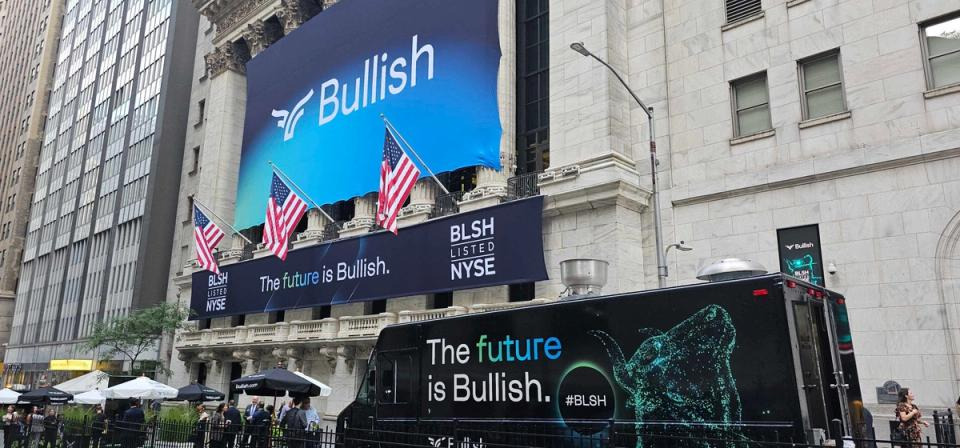
Bullish announced May 5 it will acquire Equiniti, a regulated transfer agent serving 2,500 companies and 20 million shareholders, for $4.25 billion. The deal integrates traditional securities infrastructure into Bullish’s tokenization platform, creating an end-to-end service layer for institutional-grade digital asset settlement. Closure is expected in early 2027, pending regulatory approvals. The acquisition marks the largest crypto M&A transaction of 2025, eclipsing Coinbase’s $2.9 billion acquisition of Deribit and underscoring a fundamental shift: crypto platforms are no longer building in isolation but absorbing legacy financial rails.
Why Bullish Needs Regulated Transfer Agent Infrastructure
Equiniti is not a blockchain platform—it is a federally regulated transfer agent required by law to maintain shareholder records, process equity documentation, and handle corporate actions for public companies. The firm processes $500 billion in annual payments and manages cap tables for firms ranging from Fortune 500 companies to mid-cap issuers. Bullish CEO Tom Farley framed the deal as essential: “Broad adoption at institutional scale requires three things: end-to-end tokenization services, a single, unified ledger, and issuer relationships at scale. This combination delivers all three.” Without Equiniti’s regulatory license and 2,500-company customer base, Bullish would face years of compliance build-out and relationship development. The acquisition collapses that timeline into a single transaction.
Crypto M&A Consolidation Accelerates Toward Infrastructure
Bullish’s $4.25 billion offer represents 4.9% of the $8.6 billion in total crypto M&A value recorded across 260 deals in 2025. However, deal composition has shifted dramatically. Early 2025 was dominated by smaller acquisitions—Kraken paid $1.5 billion for NinjaTrader’s derivatives platform. Bullish’s Equiniti deal is different: it targets regulated financial infrastructure with institutional customer lock-in, not trading technology. The message is clear: platforms that win will own the full stack from issuance through settlement. Competitors like BlackRock-backed Securitize and Computershare are watching closely. Neither currently owns a regulated transfer agent with Equiniti’s scale and customer base.
Tokenized Securities Market Still Nascent But Accelerating
The U.S. stock market trades approximately $70 trillion annually. Tokenized securities remain a fraction of that—most institutional issuance still relies on traditional settlement infrastructure. However, tokenization eliminates intermediaries, enables real-time settlement, and automates corporate actions (dividends, voting, proxy statements). Equiniti’s integration into Bullish gives institutional issuers a direct pathway: tokenize with Bullish, settle on unified ledger, maintain regulatory compliance through Equiniti’s licensed infrastructure. Tom Farley called tokenization “the defining infrastructure trend of the next 25 years.” If correct, Bullish has just purchased a critical bottleneck in that transition.
Regulatory Approval and Timeline Remain Open Variables
Deal closure depends on regulatory sign-off, expected in early 2027. Neither SEC nor FINRA approval timelines have been disclosed. Equiniti operates under federal oversight; any material change in ownership requires regulatory notification. Goldman Sachs advised Bullish on the transaction. Siris Capital, which has held a founding stake in Equiniti since 2021, exited through the deal alongside other shareholders. The acquisition’s success hinges on regulators viewing blockchain-based settlement as compatible with existing capital markets infrastructure—a determination that remains untested at scale.