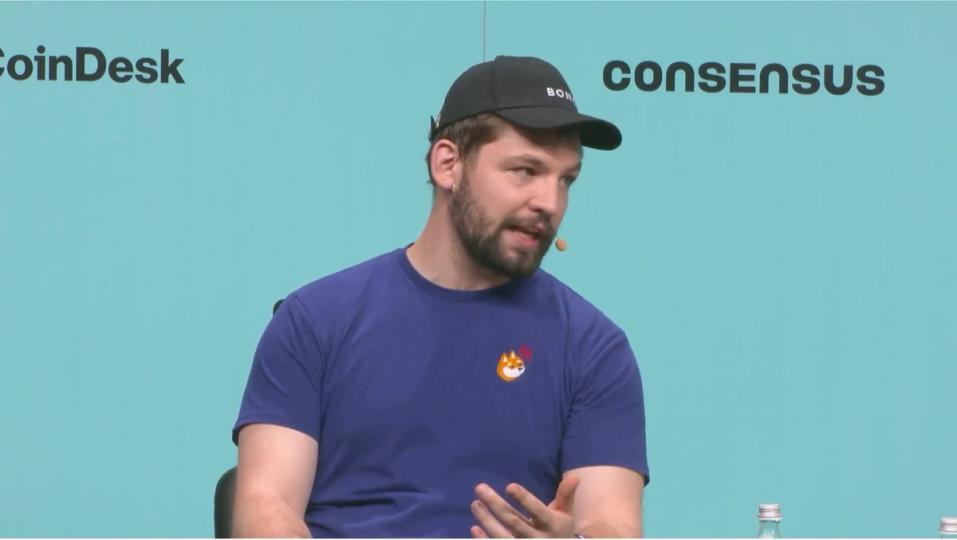
BONK, the Solana memecoin that launched as a post-FTX airdrop in December 2022, is positioning itself as the rare survivor of retail speculation through institutional infrastructure. At Consensus Miami on May 6, core contributor Nom argued that most memecoins lack the regulatory staying power to outlast market cycles, while BONK’s Nasdaq-listed holding company, SEC-filed leveraged ETF, and public treasury allocations mark a departure from the typical “rinse retail” pattern that defines the sector.
Memecoin Speculation Meets Regulatory Reality
Nom framed memecoin trading as functionally equivalent to high-risk sports betting, with crypto systems “really, really good at incentivizing inorganic traffic” but few projects equipped to survive regulatory scrutiny. BONK itself launched not as a presale or founder allocation, but as a distribution mechanism to Solana ecosystem participants when the network was trading below $10 in December 2022. The pitch, Nom noted, was “distribution rather than a token”—a framing that has since evolved into a push for institutional legitimacy that most competing projects have not attempted.
Institutional Markers and Market Position
BONK’s infrastructure now spans traditional finance rails. Bonk Holdings (BNKK), originally rebranded from Safety Shot in October 2025, currently holds 2.7% of BONK’s circulating supply and is targeting $115 million in token holdings by end of 2026. Tuttle Capital filed a 2x leveraged BONK ETF with the SEC, though approval status remains unclear. In January 2026, TenX Protocols, a TSX Venture Exchange-listed company, allocated capital to BONK’s treasury—a signal of cross-border institutional recognition. LetsBonk.fun, BONK’s launchpad, has surpassed rival Pump.fun on monthly volume, indicating ecosystem consolidation around regulated infrastructure.
Regulatory Listing as Competitive Moat
The distinction Nom drew between memecoins with regulatory anchors and those without reflects a broader shift in how tokens may survive bear markets. Public company treasury allocations, exchange listings, and ETF filings create friction costs that deter the quick exit strategies typical of memecoin founders. BONK’s ~1 million wallet user base operates within an ecosystem that now includes BonkBot, a Telegram trading interface, and formal holding structures. This contrasts sharply with the TON network’s memecoin experiments and most Solana competitors, which lack comparable institutional onramps.
The Unresolved Question
Whether regulatory markers actually protect retail participants or simply redistribute losses remains contested. The SEC has not approved Tuttle Capital’s leveraged ETF filing, and BNKK’s $115 million target assumes continued BONK price appreciation. Nom’s argument—that institutional structure separates lasting tokens from speculative exits—is testable only if BONK sustains its ecosystem through a full market cycle without founder dilution or regulatory enforcement actions.