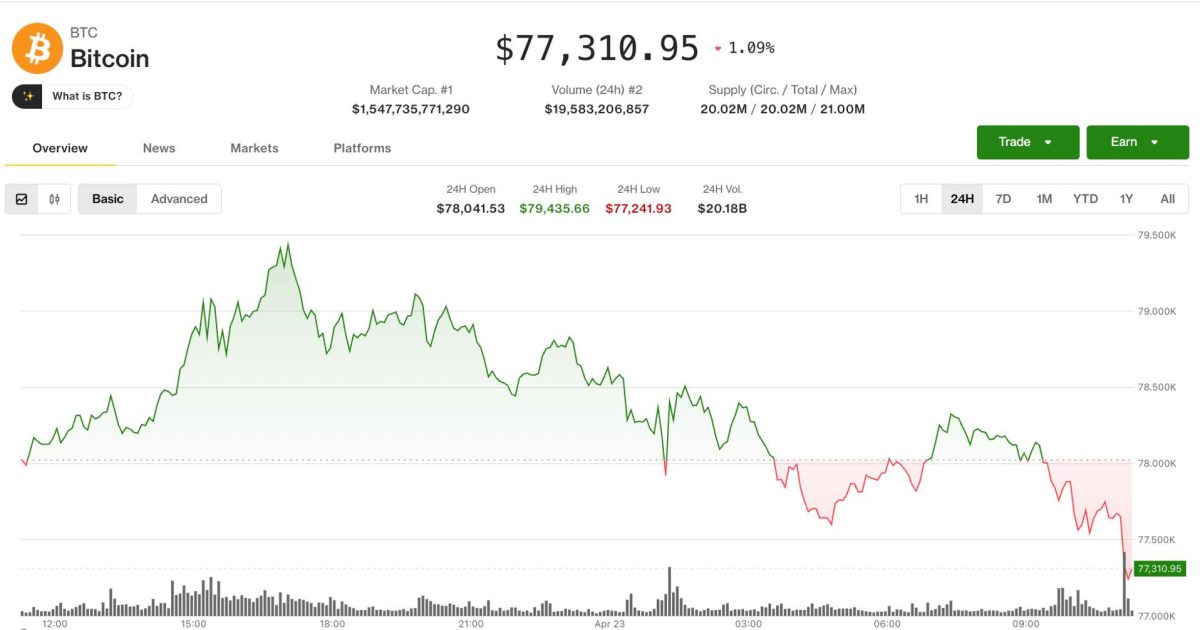
Bitcoin’s recent price movements reflect the interplay between oil markets and digital assets. After briefly testing the $80,000 mark, Bitcoin’s value has declined, signaling shifts in trader sentiment. The surge in oil prices is putting pressure on riskier assets, including Bitcoin, as investors reconsider their positions.
The rise in oil prices impacts global economic conditions, which directly influences investment in speculative markets. Traders have adopted a bearish outlook on Bitcoin, leading to increased selling pressure. High oil prices often lead to concerns about inflation and economic growth, resulting in a flight to safer assets. This has left Bitcoin vulnerable as market participants assess their risk exposure.
Recent trading activity shows a notable decline in Bitcoin volumes, confirming the bearish sentiment among traders. Analysts have pointed out that as oil prices continue to rise, Bitcoin’s appeal as a hedge against inflation may be tested. Despite reaching near $80,000, the downward pressure indicates that traders are now more cautious. Volatility in the crypto market can often be exacerbated by external factors, and this situation is no exception.
Investors are watching Bitcoin closely, particularly for any signs of stabilization around the $75,000 level. This price point could serve as a critical threshold. As oil prices fluctuate, Bitcoin’s ability to maintain its value will depend on how traders react to ongoing economic signals. The coming days will be pivotal for Bitcoin’s market dynamics.