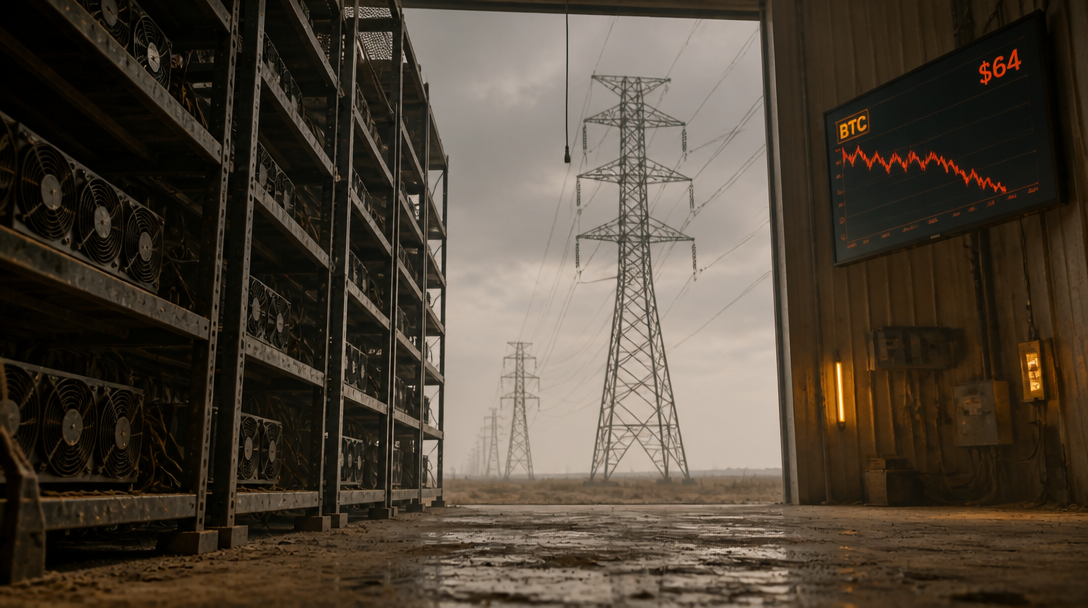
Bitcoin mining difficulty dropped 9.13% on November 14 after surging wholesale electricity prices in Texas made shutting down operations more profitable than mining for some operators, according to analysis published by Luxor on November 17.
Between October 29 and November 14, West Texas electricity prices exceeded mining revenue for 45% of hours, compared to 9% during the preceding difficulty period. Average daily electricity prices ranged from $64 to $122 per megawatt-hour between November 7 and 11, well above the $54 per megawatt-hour modeled revenue for mining equipment operating at 25 joules per terahash.
Higher electricity prices alone accounted for roughly four-fifths of the increase in unprofitable mining hours during the period. Miners with fixed-rate power contracts could earn credits by returning electricity to the grid instead of mining when wholesale prices spiked.
Riot Platforms, a major Bitcoin mining operator, earned $22.938 million in manual curtailment credits in Q3 and can suspend operations to return contracted electricity for credits when market prices exceed its fixed rates. The company also earned $1.726 million in demand response credits during the same quarter.
Bitcoin’s computing power recovered to approximately 1,100 exahashes per second between November 13 and 15 as West Texas electricity prices eased. The difficulty adjustment on November 14 brought Bitcoin’s difficulty from 148.36 trillion to 134.82 trillion. Through November 17, Bitcoin blocks averaged 9.11 minutes, faster than the 10-minute target interval.
Luxor estimated that if current block production pace persists, the next difficulty adjustment could increase by 9.85%. If block production slows to 10 minutes, the increase would be approximately 2.72%.