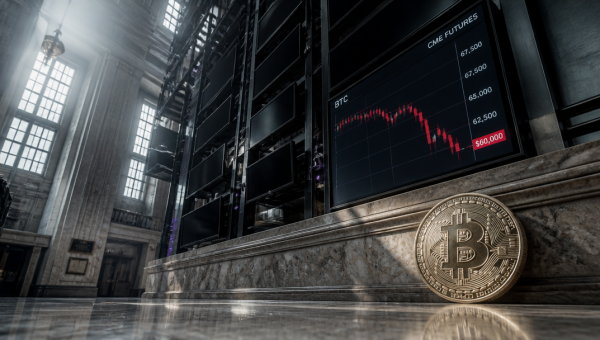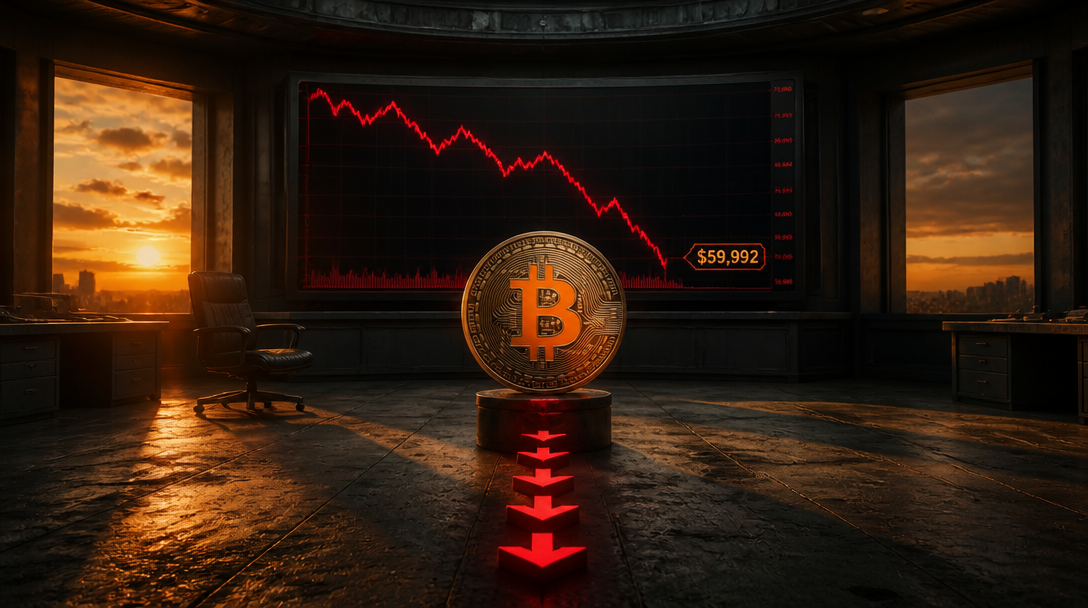
Bitcoin investors are locking in their heaviest losses since the collapse of FTX in November 2022, according to a report published Tuesday by blockchain analytics firm Glassnode.
The metric, which tracks coins moved on-chain at prices lower than their previous sale price, has surged to levels unseen in nearly four years. “Bitcoin losses are the heaviest since FTX,” Glassnode stated “Set against the money that flowed into Bitcoin over the past year, they have almost doubled in a week.”
U.S. spot Bitcoin ETFs have accelerated the outflow, losing $4.3 billion in net capital over the past 20 trading days. Bitcoin itself traded at $59,992, down roughly 50% from its October 2025 peak.
Correlation with Tech Stocks Intensifies Volatility
Bitcoin’s correlation with the Nasdaq 100 has reached its highest level since September 2022. Over the past 60 trading days, the asset has gained less when tech stocks rise and lost more when they fall, amplifying downside pressure during broader risk-off periods.
On Monday, Nvidia announced that Jensen Huang was returning as CEO, triggering a 5% Bitcoin rally. The gain evaporated within six hours, even as the Nasdaq 100 retained 75% of its gains from the announcement. The reversal underscored Bitcoin’s divergence from the broader tech sector.
Realized Price and Historical Precedent
Bitcoin’s realized price, which represents the average acquisition cost of all coins in circulation, sits at $53,200. The asset last closed below $58,500 in June, a level that may act as near-term support.
Glassnode noted that loss spikes have historically preceded market bottoms, though the pattern is inconsistent. “Spikes like this often came close to past lows, but some came early,” the firm said. The sell-offs of early 2019, March 2020, and November 2022 saw losses surge near market bottoms. However, earlier episodes in 2018 and 2022 showed prices declining further even after loss spikes peaked.
If Bitcoin applies historical discount ratios to its realized price, potential downside targets range from $41,000 (using 2022 discount levels) to $37,000 (using 2018 levels). During the FTX collapse in November 2022, Bitcoin bottomed at $16,000.
Long-Term Holders Drive Losses
Long-term holders, defined as investors holding coins for roughly five months or longer, accounted for most realized losses from mid-April through mid-November. This cohort typically accumulates during bull markets and capitulates during extended downturns.
On Binance, buying and selling have remained roughly balanced, suggesting the exchange has not seen the concentrated selling pressure visible on other platforms. Coinbase traders, by contrast, have been heavy net sellers over the past month.
Roughly 90% of long futures positions that were vulnerable to liquidation between last week’s price and $53,200 have already been wiped out, reducing tail risk for further cascading losses at those levels.