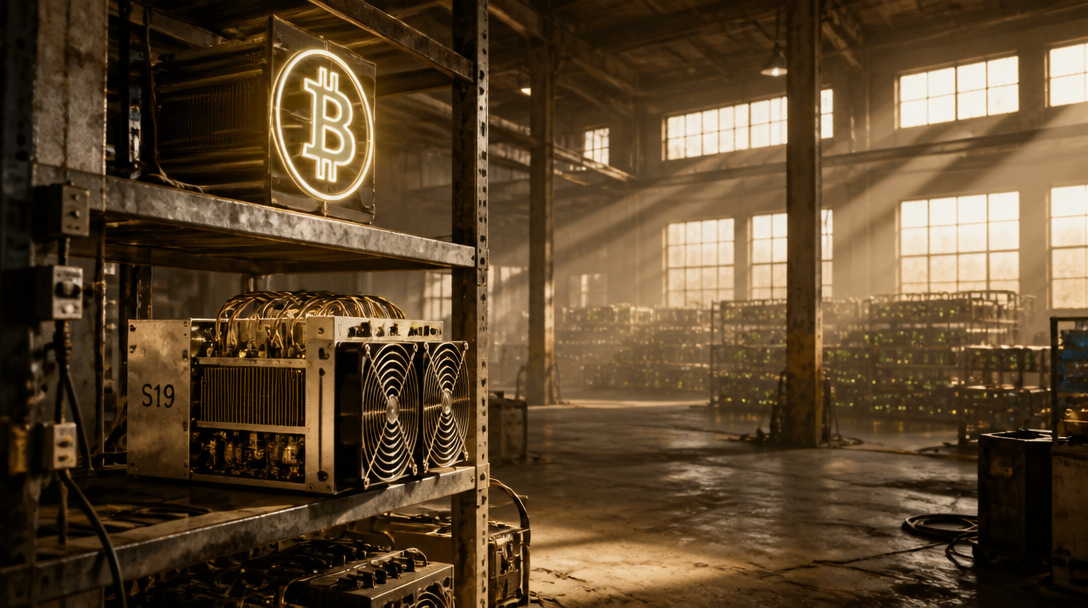
A projected 6.5% Bitcoin difficulty reduction scheduled for November 13 would boost mining revenue per unit of computing power by approximately 7%, according to Hashrate Index data published November 9. Yet the improvement leaves older BITMAIN S19 mining rigs unprofitable at an illustrative 5 cents per kilowatt-hour electricity rate, underscoring the narrow margins facing legacy hardware operators.
Hashrate Index measured the spot hashprice at $31.89 per petahash per second per day on November 9. After the projected difficulty cut, that figure would rise to $34.11 per petahash per second per day, a 6.95% increase in expected daily revenue per unit of mining capacity before operating expenses.
The difficulty adjustment recalculates every 2,016 blocks using block timestamps to maintain a roughly two-week block interval. Lower difficulty increases the probability that a given amount of computing work earns a block reward, raising expected revenue per unit of work when the reward value remains constant.
Profitability Ceilings Across Rig Models
The S19 240-Ca, an older BITMAIN model with two hashrate variants, operates at 95 terahashes per second or 90 terahashes per second with a power draw of 3,250 watts at 25 degrees Celsius. The electricity-only ceiling for the 95 TH/s variant stood at 3.88 cents per kilowatt-hour on November 9. After the projected difficulty cut, that ceiling rises to 4.15 cents per kilowatt-hour. The 90 TH/s variant ceiling moves from 3.68 cents to 3.94 cents per kilowatt-hour.
These figures represent the highest electricity tariff that gross mining revenue can cover, excluding pool fees, cooling costs, labor, hosting overhead, repairs, financing and equipment depreciation. At the illustrative 5 cents per kilowatt-hour rate cited in the analysis, both S19 variants remain unprofitable even after the difficulty cut.
Newer hardware performs better. The BITMAIN S21 operates at 200 terahashes per second with a power draw of 3,500 watts at 25 degrees Celsius. Its electricity ceiling was 7.59 cents per kilowatt-hour on November 9, rising to 8.12 cents per kilowatt-hour after the projected cut. At 8 cents per kilowatt-hour, the S21 retains approximately 10 cents per day in remaining margin, according to Hashrate Index calculations.
The analysis assumes continuous operation at nominal ratings with Bitcoin price, block subsidy and average transaction fees per block held constant. BITMAIN S19 240-Ca variants carry hashrate tolerance of plus or minus 3% and wall-power tolerance of plus or minus 5%, introducing variance in actual operating performance.
Current Bitcoin difficulty stood at 148.36 trillion as of the November 9 Hashrate Index snapshot. The projected November 13 adjustment reflects the network’s automatic recalibration mechanism, which targets stable block production intervals regardless of aggregate mining power changes.