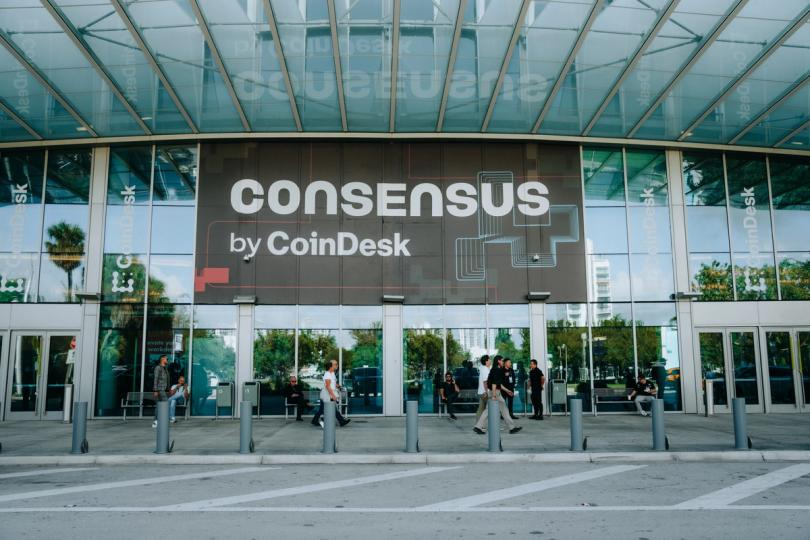
The Clarity Act could be signed into law by July 4, 2026, according to Patrick Witt, White House Executive Director of the President’s Council on Digital Assets. The statement came during Consensus Miami 2026, where industry leaders and policymakers debated crypto regulation, prediction markets, and ethics provisions ahead of a critical Senate Banking Committee markup scheduled for Thursday at 14:30 UTC.
Witt Sets July 4 Timeline Amid Banking Committee Push
Patrick Witt told attendees at Consensus Miami 2026 that it is “possible to have President Donald Trump sign the Clarity Act into law by July 4.” The timeline hinges on passage through the Senate Banking Committee markup scheduled for Thursday and subsequent House approval. The Clarity Act has dominated crypto policy discussions for months, defining regulatory jurisdiction over digital assets and establishing clearer guardrails for stablecoins and market infrastructure. Witt acknowledged uncertainty around House vote timing, indicating the July 4 deadline remains contingent on legislative momentum. Senator Kirsten Gillibrand has advocated for ethics provisions in market structure legislation, signaling ongoing debate over the bill’s final language.
Prediction Markets and Market Structure Dominate Policy Debate
Consensus Miami 2026 featured heated discussion on whether prediction markets should be classified as gambling or financial products. Jacob Fortinsky, CEO of prediction market provider Novig, announced the platform plans to transition to a Derivatives Clearing Member (DCM) framework this summer, expanding coverage from 35 states to all 50 states. A Tether executive warned that the 2026 midterms could have a “seismic impact” on crypto industry oversight. A CoinDesk voter survey of 1,000 registered voters found that 57% prefer banks over crypto for financial services, and crypto ranks low in voter priorities relative to the economy and healthcare. Only 17% of voters surveyed knew that Trump and his family co-founded World Liberty Financial, a crypto venture now subject to regulatory scrutiny and industry speculation.
Voter Skepticism and Regulatory Fragmentation Challenge Administration
Despite the Trump administration’s pro-crypto positioning, a majority of voters surveyed by CoinDesk oppose administration oversight of the sector. The finding underscores a credibility gap between crypto industry support and broader public trust. Prediction markets regulation remains unresolved, with 57 Maiden, a prediction market firm, facing bans from two major sportsbooks. The ongoing debate between financial regulators and gambling authorities threatens to fragment market structure rules across federal and state jurisdictions. Stablecoin issuers like Tether are pushing for regulatory clarity before the midterms, signaling urgency among market participants.
Senate Markup Becomes Inflection Point for Crypto Policy
Thursday’s Senate Banking Committee markup represents the Clarity Act’s first major legislative hurdle. Passage would move the bill toward House consideration, potentially clearing the path for a July 4 signing. Failure to advance could delay crypto regulation into the second half of 2026, extending uncertainty for exchanges, stablecoin issuers, and prediction market operators. Industry participants are watching collateral standards discussions at protocols like Aave and revival timelines for Binance.US, both of which depend on regulatory clarity.