Bitcoin funding rates dropped to -4% annualized in April 2026, marking the most negative levels since 2023 and the lowest on a 30-day basis this decade. The extreme bearish positioning among derivatives traders contrasts sharply with spot market resilience, where U.S. bitcoin ETFs pulled in $1.6 billion in May despite price volatility. The setup historically precedes positive returns across 30 to 365-day periods, even as BTC traded in the low $80,000s and spot buyers remained undeterred by leverage liquidations.
What Negative Funding Rates Mean for Bitcoin
When bitcoin futures funding rates turn deeply negative, long position holders receive payments from shorts to maintain exposure. This occurs when derivatives traders expect downside, flooding the market with bearish contracts. James Aitchison, founder and CIO of Caerus Global, noted the severity: “The longs are getting paid, which is quite a rarity. On a 30-day basis, the lowest it has been this decade.” Negative funding is counterintuitive—it punishes the very traders betting on price declines while rewarding those holding bullish positions. Historically, such extremes have preceded multi-month rallies, suggesting current market structure may be pricing in excessive downside risk.
Institutional Inflows Override Derivatives Pessimism
While derivatives traders positioned for losses, spot bitcoin ETFs told a different story. U.S. spot ETF inflows reached $1.6 billion in May 2026, demonstrating institutional appetite remained intact despite price drawdowns from April’s $75,000+ levels. The iShares Bitcoin Mini Trust (IBIT) saw options open interest surpass Deribit, the world’s largest crypto derivatives exchange, signaling a shift of trading activity toward regulated U.S. venues. Morgan Stanley launched its own bitcoin ETF in April, joining Grayscale, Fidelity, and BlackRock in the institutional custody race. Dan Blackmore, chief commercial officer at on-chain analytics firm Glassnode, contextualized the shift: “We’re witnessing the early innings of the Wall Street machine and its impact on the crypto market.”
Halving Cycle Debate Clouds Year-End Outlook
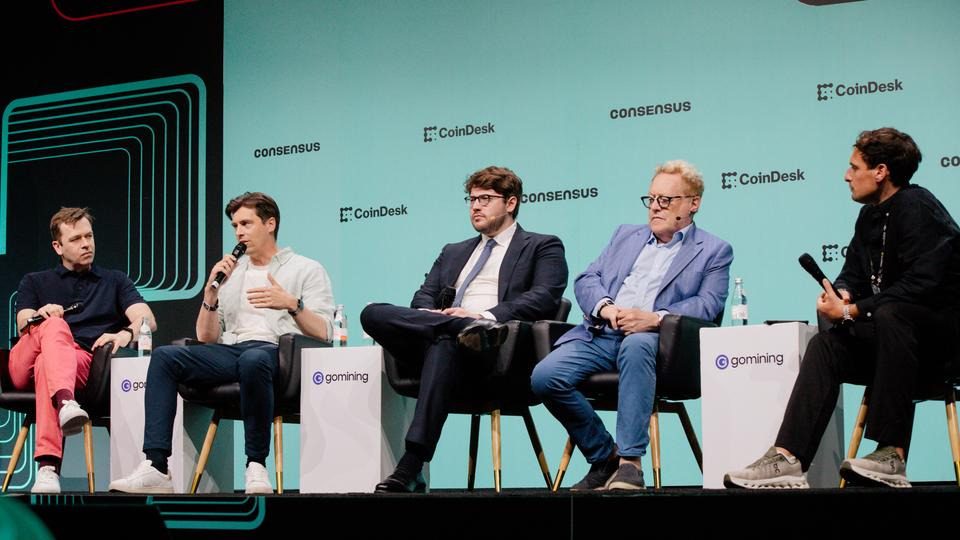
Bitcoin’s four-year halving cycle has historically driven bull markets, but panelists disagreed sharply on its relevance going forward. Cole Kennelly, founder of Volmex Labs, projected $250,000 by year-end 2026, while James Aitchison targeted $150,000 if Federal Reserve rate cuts materialize. Michael Terpin, author of “Bitcoin Supercycle,” and Dan Blackmore argued bitcoin may not reach new highs in 2026, suggesting the halving cycle loses force as institutional adoption reduces volatility. The debate hinges on whether traditional finance integration fundamentally alters bitcoin’s risk-reward dynamics or simply accelerates existing cycles.
Next Test: Sustained Institutional Demand
Bitcoin’s ability to push through $75,000 in April while funding rates cratered signals structural support from spot buyers. The coming months will reveal whether negative funding rates persist—a sign of sustained short-term pessimism—or reverse as derivatives traders capitulate. ETF inflows and options migration to regulated venues suggest institutional adoption is accelerating regardless of price action. The critical variable is whether spot demand remains resilient if BTC revisits the $60,000 level tested earlier in the cycle.