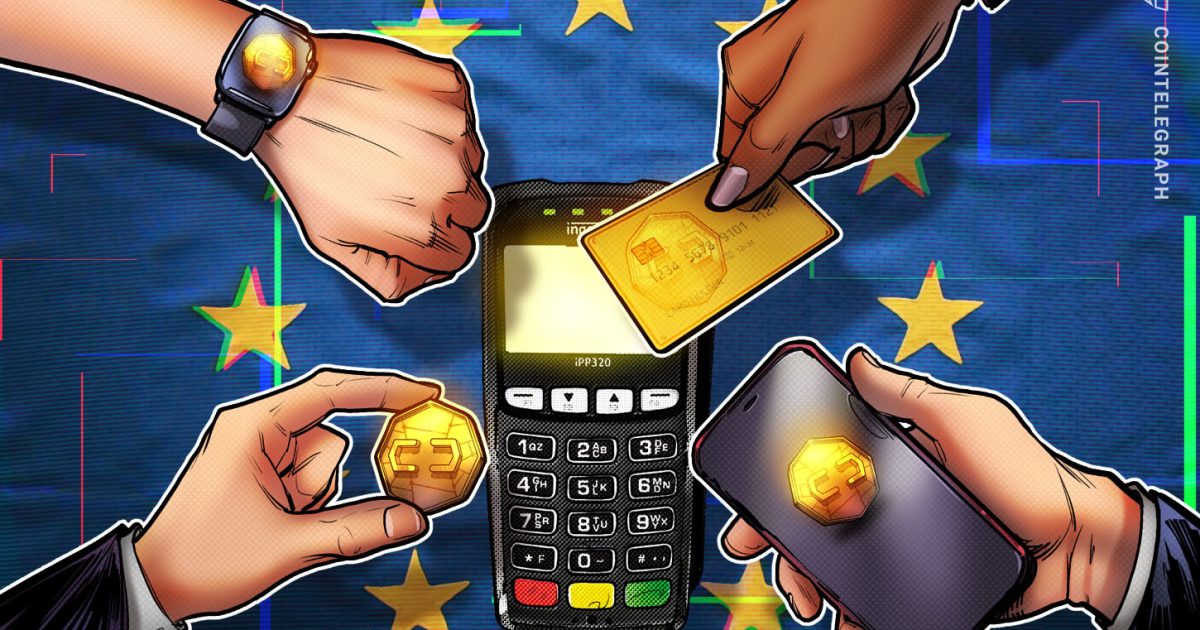
OKX Card transaction data from January through February 2026 reveals European users are deploying stablecoins for mundane purchases—groceries (26%), restaurants (18%), and online shopping (13%)—rather than luxury goods, marking a shift toward routine payment adoption across the European Economic Area.
Stablecoin Cards Replace Daily Spending, Not Luxury Purchases
OKX launched its EU stablecoin payment card through regulated issuer Monavate, enabling direct cryptocurrency spending at merchant terminals. Analysis of the top 20 merchant categories by transaction count and volume shows grocery and supermarket transactions dominating at 26% of all card activity. Restaurants and fast food follow at 18%, with online marketplaces capturing 13% across the EEA. The data excludes peer-to-peer transfers and focuses exclusively on merchant transactions. An OKX spokesperson confirmed the figures reflect “majority of daily spending behaviors and any high-value outliers,” indicating that everyday people are using crypto cards for coffee and groceries—not collectibles or investment purchases.
European Spending Patterns Diverge by Country
Geographic variation in transaction patterns reveals distinct spending habits across EEA markets. The Netherlands leads in supermarket adoption at 37% of transactions, while Germany shows the highest online marketplace share at 30%. Poland demonstrates strong convenience store usage at 16% and fuel station transactions at 9%, suggesting crypto cards are gaining traction in quick-purchase environments. France’s bakery spending reached 5%, compared to a 2% EEA average, indicating localized merchant acceptance and consumer preference patterns. These variations suggest that crypto card adoption is not uniform but shaped by local retail infrastructure and merchant readiness. Spain’s Circle EURC data separately shows retail transactions accounting for 36% of total volume, with an average payment size of €49, reinforcing the sub-€100 transaction thesis.
Micro-Transactions Signal Mainstream Displacement of Legacy Cards
Cex.io’s 2025 card data revealed 45% of transactions fell under €10, with 40% of spend occurring online. This contrasts sharply with the euro-area average for online card payments at 21%, indicating stablecoin-funded cards are capturing disproportionate share in small-value digital transactions. Circle’s Q1 2026 EURC transaction data from Spain mirrors this pattern, with 25% of total volume concentrated in routine retail categories. The shift toward micro-transactions and routine purchases suggests stablecoin cards are not novelty products for early adopters but functional replacements for debit cards in everyday commerce. This displacement is occurring without marketing premiums or loyalty incentives—users are simply choosing crypto cards for convenience and lower friction.
Adoption Signals Regulatory Viability and Market Readiness
The breadth of merchant categories and transaction volumes indicate European regulators and payment networks have created sufficient guardrails for mainstream use. OKX’s reliance on Monavate, a regulated card issuer, removes counterparty risk concerns that historically deterred retail adoption. Cross-provider consistency—OKX, Cex.io, and Circle all reporting similar spending patterns—suggests this is not isolated to a single platform but reflects structural demand for stablecoin payments in routine transactions. The next inflection point will be merchant adoption density. Current data covers top 20 categories; expansion into smaller merchants and regional chains will determine whether crypto cards become a genuine alternative to legacy payment rails or remain concentrated in early-adopter pockets.