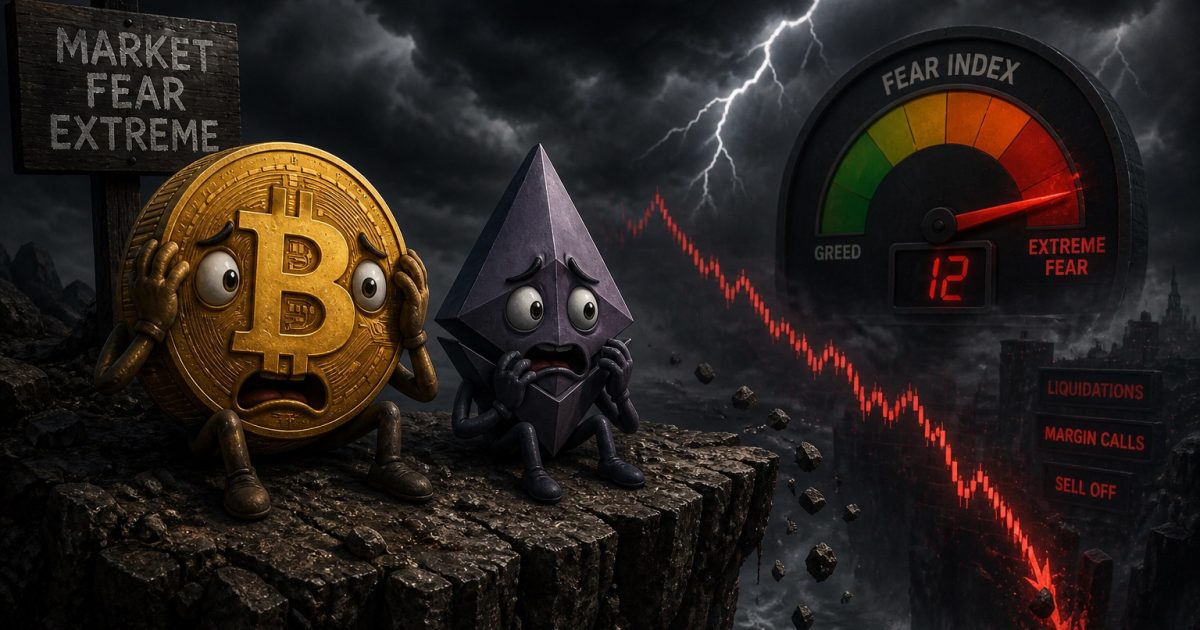
Bitcoin and Ethereum are showing stabilization signals, but crypto market sentiment remains deeply fearful. The Crypto Fear & Greed Index dropped to 26 on May 1, down from 29 the previous day, signaling persistent caution despite a sharp recovery from April’s extreme lows of 8-12. The index measures market emotion on a scale of 0 (extreme fear) to 100 (extreme greed) by analyzing volatility, social media sentiment, and transaction volume.
April’s Extreme Fear Gave Way to Uneven Relief
April opened with panic selling that pushed the Fear & Greed Index to single digits—among the most fearful readings on record. By April 23, the index briefly climbed to 46, suggesting some confidence returned. That momentum peaked on April 27 when the index spiked to 67 and Bitcoin attempted to break above $80,000. But the rally proved fragile. Within days, the index collapsed back to 26, indicating traders failed to sustain bullish conviction. Bitcoin did post a 12% gain for April and currently trades near $77,000, but that monthly advance hasn’t translated into stable sentiment.
Bitcoin Outpaces Ethereum as ETF Flows Diverge
Bitcoin has shown stronger recovery momentum than Ethereum, driven in part by heavier inflows into Bitcoin spot ETFs. Ethereum, trading at $2,274 with a 1% 24-hour gain, faces resistance at $2,300 and has experienced uneven inflows compared to Bitcoin. The divergence matters: Bitcoin’s institutional bid through ETF products has cushioned its decline, while Ethereum lacks equivalent structural support. This split recovery is one reason the Fear & Greed Index remains suppressed—market participants are unconvinced that gains can hold across the entire ecosystem.
Market Demands Proof That Rebounds Can Stick
The pattern is now clear: short-term relief buying creates brief spikes in the Fear & Greed Index, but traders quickly rotate back to caution. The April 27 spike to 67 was followed by a 41-point drop in days. This cycle suggests the market is waiting for a durable catalyst—whether regulatory clarity, institutional adoption, or macro stabilization—before committing to sustained recovery. Until then, the index is likely to oscillate between 20 and 40, reflecting a market caught between fear of further losses and skepticism of any rally’s durability.