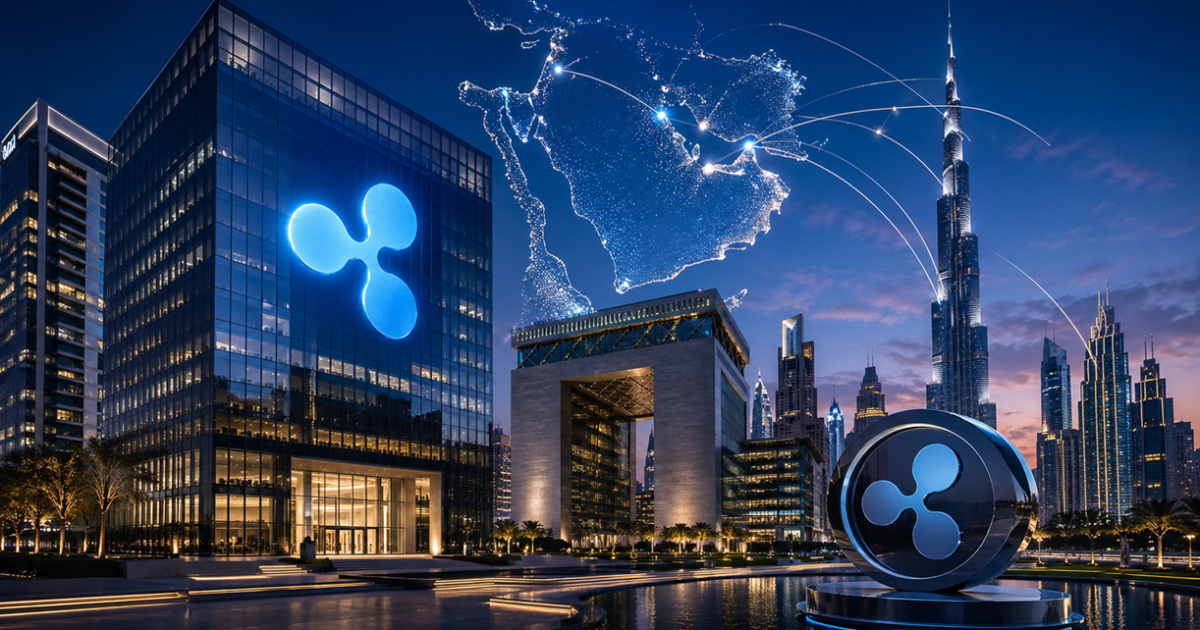
Ripple opened a new regional headquarters in Dubai’s International Financial Centre, marking its largest Middle East and Africa footprint since securing full regulatory approval from the Dubai Financial Services Authority in March 2025. The move reflects accelerating institutional demand for compliant blockchain payments infrastructure across the region, with the company now positioned to double its local operational capacity. XRP traded at $1.3737 at press time as the expansion underscored Ripple’s strategic pivot away from US-centric operations toward emerging markets with clearer regulatory frameworks.
DFSA Licensing Opens Institutional Gateway
Ripple became the first blockchain payments provider to receive full DFSA approval, a distinction that transformed the regulatory calculus for cross-border settlement in the region. The license enables regulated payments flows from DIFC, removing friction that previously constrained institutional adoption. Shortly after, the DFSA approved RLUSD, Ripple’s dollar-backed stablecoin, as a recognised crypto token. This dual approval creates a licensed corridor for institutional participants: banks and fintech firms can now settle payments in a DFSA-regulated stablecoin through a DFSA-licensed provider. Reece Merrick, Ripple Managing Director for MEA, framed the expansion as validation of “the region’s upward trajectory” in digital assets, signalling confidence in regulatory maturity that now rivals traditional finance jurisdictions.
MEA Becomes Non-US Revenue Anchor
The region has attracted a constellation of institutional clients including Zand Bank, Garanti BBVA, Absa Bank, and Chipper Cash, alongside emerging fintech platforms like Ctrl Alt. The headquarters expansion capacity to double existing operations reflects transaction volume growth, though Ripple has not disclosed specific MEA revenue or settlement figures. Arif Amiri, DIFC Authority CEO, positioned the expansion as proof that “world-leading digital asset firms” now view Dubai as a “global hub for blockchain technology,” competing directly with Singapore, Hong Kong, and Switzerland for institutional blockchain infrastructure investment. This narrative shift from Dubai as crypto safe haven to Dubai as regulated payments backbone carries implications for capital flows within Asia and Africa.
Stablecoin Infrastructure Reshapes Payment Rails
RLUSD approval is the structural linchpin. Institutional participants no longer depend on unregulated stablecoins for settlement; they can use a DFSA-recognised token through a DFSA-licensed provider. This mirrors moves by competitors (Circle’s USDC now has regulatory recognition in multiple jurisdictions) but Ripple’s advantage lies in pre-existing banking relationships. K Bank in Korea and multiple African lenders have already integrated Ripple’s settlement infrastructure. The combination of RLUSD legitimacy and DIFC regulatory cover creates a template for other emerging markets considering stablecoin frameworks. Whether other MEA regulators adopt similar approval pathways remains the open question.
Next Milestones: Scale and Replication
Ripple has not disclosed when the expanded headquarters will reach full operational capacity or announced headcount targets for the MEA region. The commercial test case will be whether institutional volumes through DIFC justify the infrastructure investment within 12-18 months. More significantly, the DFSA model may prompt regulators in Saudi Arabia, Abu Dhabi, and Egypt to establish comparable licensing frameworks for blockchain payments providers. If replication accelerates, Ripple’s MEA footprint could become its largest revenue driver outside the United States.