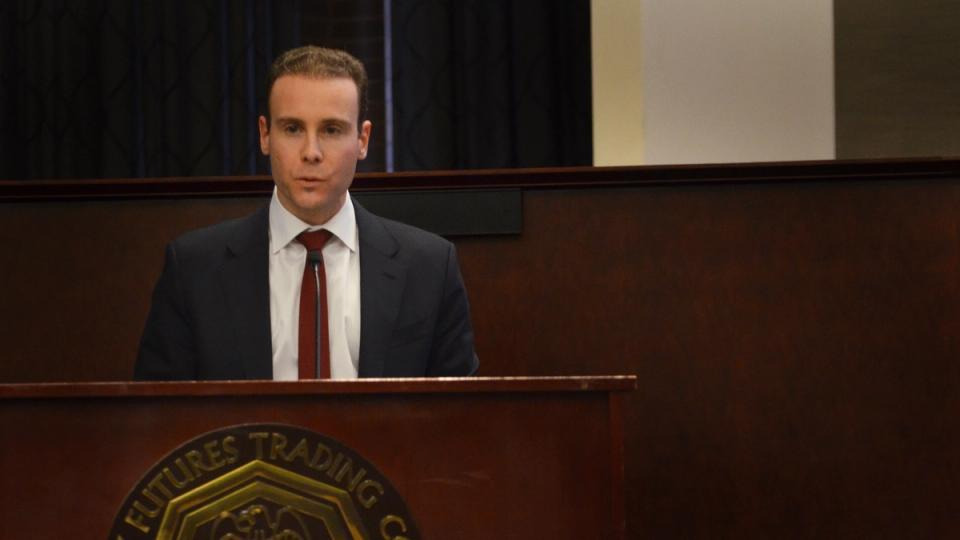
The U.S. Commodity Futures Trading Commission sued Wisconsin in federal court days after the state filed its own lawsuits against Kalshi, Coinbase, and Polymarket, marking the latest escalation in a jurisdictional battle over whether prediction markets qualify as federally regulated derivatives or state-controlled gambling. CFTC Chairman Mike Selig has made the legal campaign a priority, declaring that states interfering with federal financial market regulation will face federal litigation. The dispute hinges on a fundamental question: whether event-contract platforms fall under exclusive federal derivatives jurisdiction or remain subject to state gaming laws.
Wisconsin’s Gambit and Federal Response
Wisconsin sued Kalshi, Coinbase, Polymarket, Robinhood, and Crypto.com last week, treating prediction markets as unlicensed gambling operations in violation of state law. The CFTC responded swiftly by filing suit against Wisconsin itself in U.S. District Court for the Eastern District of Wisconsin, asserting that the state’s enforcement actions interfere with federal derivatives regulation. Selig signaled the agency’s resolve with a direct warning: “If you interfere with the operation of federal law in regulating financial markets, we will sue you.” This pattern mirrors the CFTC’s approach in four other states—New York, Arizona, Illinois, and Connecticut—where similar conflicts have already triggered federal litigation.
State Enforcement Collides With Federal Authority
New York filed parallel lawsuits against Coinbase and Gemini the same week Wisconsin acted, creating overlapping enforcement actions across multiple jurisdictions. The timing suggests coordinated state action against the prediction market ecosystem. However, an Arizona court already paused criminal prosecution against Kalshi earlier this month, signaling that federal preemption arguments may prevail in actual litigation. This precedent weakens state-level enforcement strategies and strengthens the CFTC’s legal position. The agency operates with just one active commissioner out of five authorized members, yet maintains aggressive litigation capacity, suggesting prediction markets remain a core regulatory priority regardless of staffing constraints.
Derivatives Law vs. Gambling Statutes
The CFTC’s core argument rests on exclusive federal jurisdiction over event contracts as derivatives under the Commodity Exchange Act. States classify the same products as unlicensed gambling, creating direct statutory conflict. This jurisdictional gap has created space for platforms like Kalshi and Polymarket to expand, but only so long as federal courts affirm preemption. The Arizona pause on Kalshi prosecution suggests judges are receptive to federal supremacy arguments, but no final ruling has emerged. The outcome will determine whether prediction markets operate under federal derivatives oversight—with CFTC approval and oversight—or remain subject to state-by-state enforcement as gambling.
What Comes Next
The Wisconsin federal lawsuit will likely consolidate with the New York case, creating a consolidated legal test for federal preemption. The CFTC faces mounting litigation across four states simultaneously, yet continues filing new suits rather than settling. If federal courts consistently rule in the CFTC’s favor, prediction market platforms gain legal certainty. If states prevail, the regulatory framework fragments into a state-by-state patchwork, forcing platforms to choose between federal compliance and state-by-state licensing.