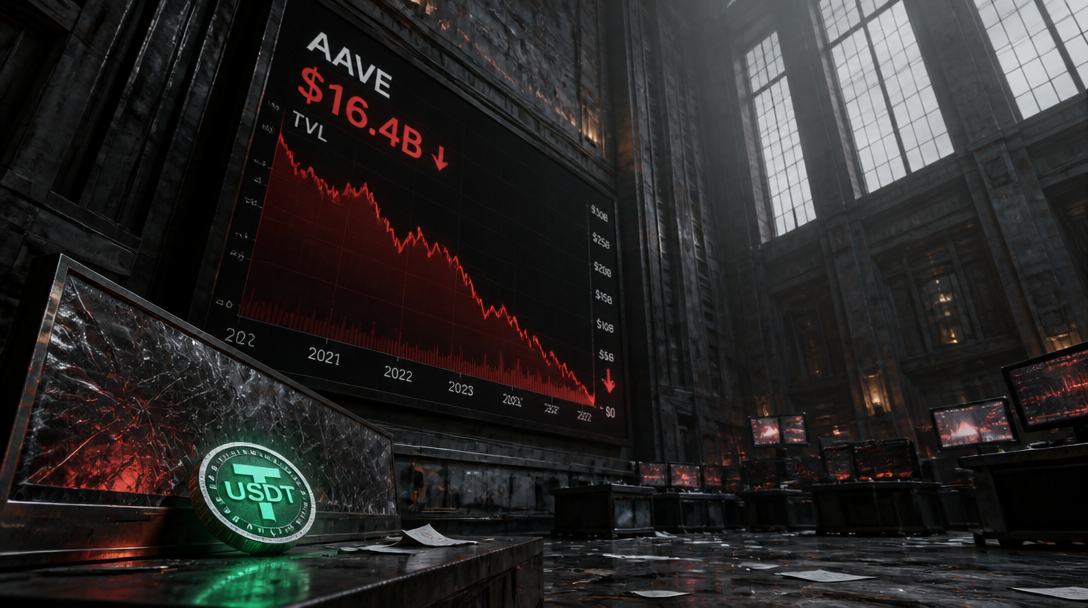
A security breach at Binance on October 29 triggered a $6.34 billion asset impact across DeFi, with Aave and Lido suffering combined capital losses totaling $1.7 billion by November 3.
The exploiter supplied 60 million USDT to Aave and borrowed 19.76 million WETH, worth $44.6 million. Aave’s Guardians froze 175 V3 and 117 V4 reserves to contain risk, blocking new deposits and borrowing while permitting repayments, withdrawals, and liquidations. Reserve utilization spiked to 92-100 percent across affected configurations.
Aave’s total value locked fell $1.030 billion from October 27 to November 3, dropping from $17.435 billion to $16.405 billion. Lido’s TVL declined $713 million over the same period, from $22.557 billion to $21.844 billion. Other lending and staking protocols also contracted: JustLend lost $437 million, Morpho shed $358 million, and Sky fell $312 million.
The exploiter’s position was assessed as overcollateralized and subject to normal liquidation procedures, posing no direct risk to suppliers. Binance stated it would absorb the financial impact of the breach. Aave’s stewards temporarily reduced upper interest-rate curves to manage borrowing costs as reserves reopened on October 31 and returned to pre-incident rate curves by November 1.
Stablecoin market capitalization contracted $10.8 billion over 30 days, falling to $293.8 billion by November 3, according to DeFiLlama data. USDT and USDC accounted for $8.4 billion of that decline. The contraction began before the Binance breach, with stablecoin TVL declining from $308.8 billion on October 4 to $303.3 billion on October 27. As of November 2, USDT, USDC, and USDT0 retained zero collateral borrowing power in affected reserve configurations.
Falling token prices can reduce TVL without requiring depositors to move assets, and issuer redemptions differ from tokens moving off exchanges or between wallets. LlamaRisk assessed the exploiter position on October 30 and provided updates on collateral settings restoration through November 2.